Dwarf Rabbit
2 Photo Gallery

1 Dwarf Rabbit Breed Overview
Dwarf Rabbit (details)
The Dwarf Rabbit is a typical pet rabbit breed, very small in size, and purebreds are quite expensive. Some vendors pass off ordinary small rabbits as Dwarf Rabbits; a true Dwarf Rabbit never grows large, which is the biggest difference.
Chinese name: Dwarf Rabbit
English name: Dwarf Rabbit
Origin: Germany
Reproduction: Viviparous
Subspecies: Teddy Dwarf, with mane-like long hair; the Teddy Lion and the long-eared Teddy Lamb
History: Derived from a variant of the Netherland Dwarf
Body: Body length only 30 cm, weight 1–2 kg, extremely small and delicate
Purchase: Note that due to low numbers they are hard to obtain and priced rather high.
2 Dwarf Rabbit Physical Characteristics
Dwarf Rabbit (details)
Like all dwarf rabbit breeds, the Dwarf Rabbit is a forever-small variety—a very cute pet. Its appearance changes little, but its coat color can vary a lot. The biggest identifying feature of a Dwarf Rabbit is its never-growing-large body.
The Netherland Dwarf Rabbit is a pet rabbit, a type of small rabbit. The Netherland Dwarf has short ears and a round face, with gray or tan coat colors. The Peter Rabbit character was created based on one of this breed’s lines—the ‘Mini Rabbit.’ Because purebred numbers are low, the price is quite high.
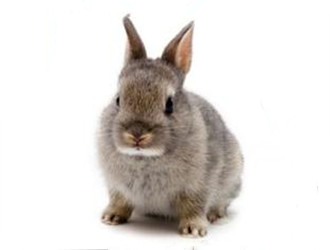
The Dwarf Rabbit is the most mini, super-cute pet rabbit, with a round, heavy body and lots of fur. It has a flat nose, long front legs, and long hair on the neck, cheeks, and top of the head, in colors such as pure white, mouse-gray, brown, and white with black spots. A grown Dwarf Rabbit is only 30 cm long and weighs 1–2 kg—truly a ‘mini rabbit.’ Because it has become a fixed breed, it will not grow large like the ‘mini rabbits’ sold at night markets.
3 Dwarf Rabbit Care Tips
Dwarf Rabbit (details)
The Dwarf Rabbit’s small size makes care a bit tricky—everything must be done carefully. So what should you watch for when keeping a Dwarf Rabbit? Here are the care notes.
When keeping baby rabbits, first buy a suitable cage that allows the rabbit to stand up; provide enough food, feeding pellets three times a day, such as weeds and rabbit pellets, with one pineapple pellet per day. The owner should comb the rabbit’s fur once daily to help with shedding and prevent hairballs. Trim the nails once a month to avoid ingrown nails, and long-haired varieties should be trimmed every two to three months to avoid overheating from overly thick fur.
Because rabbits clean their own fur, there is no need to bathe them unless necessary. The Dwarf Rabbit is quite easy to keep; because it is so small it does not need much space, and the owner can let it roam outside the cage to increase exercise and reduce stress. But be careful—its tiny size means it can easily get into danger in gaps and crevices.
4 Dwarf Rabbit Living Environment
Dwarf Rabbit (details)
In the Dwarf Rabbit’s living environment, the most important thing is the cage setup, which has its own know-how—because not all Dwarf Rabbits suit cage life, and not all caged rabbits suit living together.
I. Littermates should be separated into individual cages after adulthood
Adulthood means the Dwarf Rabbit can reproduce; if not separated, inbreeding can occur. Generally, rabbits from the same litter should be considered for separate cages after weaning at one month, which benefits the healthy growth of the babies.
II. Pregnant does must be kept alone
Once a doe is found pregnant, she must be separated from the buck. First, to avoid repeated consecutive pregnancies; second, because expectant mothers become protective and aggressive.
III. Baby rabbits after one month are best separated from the mother
Baby rabbits after one month can eat alfalfa on their own and no longer depend on nursing. It is recommended to keep the mother and babies in two separate cages, so as not to burden the mother.
IV. Injured or sick rabbits are advised to have a ‘single room’
Injured or sick rabbits need special care, and isolation also prevents contagious diseases from spreading to other Dwarf Rabbits.
V. Separate Dwarf Rabbits that have shown fighting behavior
If mutual fur-biting or fighting appears in a group, separate them promptly; this usually happens between adult same-sex Dwarf Rabbits.
VI. Separate Dwarf Rabbits with a large size difference
A size difference means a strength difference; combined with adult bucks’ strong territorial sense, mixing them means the small Dwarf Rabbit will inevitably be bullied, so separate those with a large size gap.
5 Dwarf Rabbit Feeding Guidelines
Dwarf Rabbit (details)
The Dwarf Rabbit’s food includes some hay, some pellets, some vegetables, some treats, and drinking water, with hay making up the largest share. So hay selection matters and can be chosen by the Dwarf Rabbit’s age.
I. Hay supply under 6 months
The Dwarf Rabbit is a baby, so use baby-specific pellets; for hay, alfalfa can be given liberally—available at ordinary pet stores or online (very cheap).
Dwarf Rabbits under 3 months are not advised to eat fresh vegetables and fruit, because their body systems are not fully developed and water-heavy food easily causes diarrhea, which can quickly turn a Dwarf Rabbit into an ‘angel rabbit.’
After 3 months, start giving more timothy hay and sweet oats.
II. Food supply after 6 months
At this point it is an adult, so switch to adult-specific pellets; stop alfalfa, because alfalfa is a high-nutrition grass suited to supplementing babies, and too much for adults can cause urinary tract problems. Don’t forget to give the Dwarf Rabbit water (changed often); hay is the staple, pellets are a side food. Hay must be supplied without limit, pellets once in the morning and once in the evening (hay must be fresh).