Common Snapping Turtle
2 Photo Gallery

1 Overview
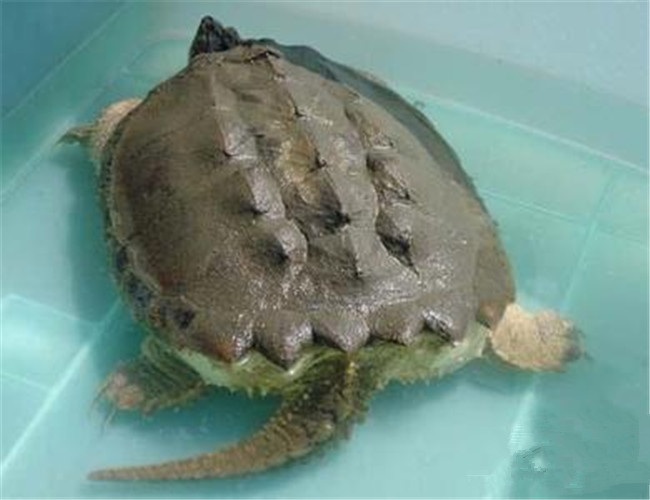
The common snapping turtle (Chelydra serpentina) – the ‘small croc’ – is the most common and cheapest of the four Chelydra subspecies, native across eastern North America. Most sold in China are wild-caught (no successful captive breeding yet).
SOURCE NOTE: the source called it ‘North American (Common) Snapping Turtle’; the binomial is Chelydra serpentina (the Central American form is C. rossignonii).
2 Appearance
One of four subspecies and the largest-growing and most genetically unstable (most prone to morphs). Three main morph lines: white-yellow (high-yellow / white variant), orange-red (golden-orange / chilli-red), and red-eyed albino (solid white, red eyes – very rare and pricey). The chilli-red is simply a deeper orange.
3 Care & Temperament
Mating April-September, laying May-November (peak June), 11-83 eggs (usually 20-30), hatching in 55-125 days. Temperature governs sex: above 30 C and below 20 C yield females; 22-28 C yields males. Hatchlings are ~24-30 mm, black, with a bump on each scute.
4 Habitat & Environment
A farm pond should be sited with good water, quiet and access. Use a brick/cement pool with smooth walls, rectangular (east-west) or round, 50-80 cm deep (max 120). Build a 1/3-submerged feeding platform leading to a 20-30 cm sand nesting area under a rain shelter; pipes >=10 cm; soak and lime the new pond a week before stocking.
5 Diet & Feeding
A carnivore-leaning omnivore, mainly fish and shrimp. Keep water deep enough to float the shell flat; hatchlings eat pellets and bloodworms, adults take fish/shrimp/meat, with regular sunning for calcium. Small frequent meals aid digestion; avoid salty seafood (organ failure). They tolerate 3-45 C, most active 20-30 C, grow fastest 28-31 C, brumate below 15 C and survive 1 C+ under ice. Feed fish, loach, shrimp (for calcium), insects, earthworms, organs and trimmings.