Marginated Tortoise
2 Photo Gallery

1 Overview
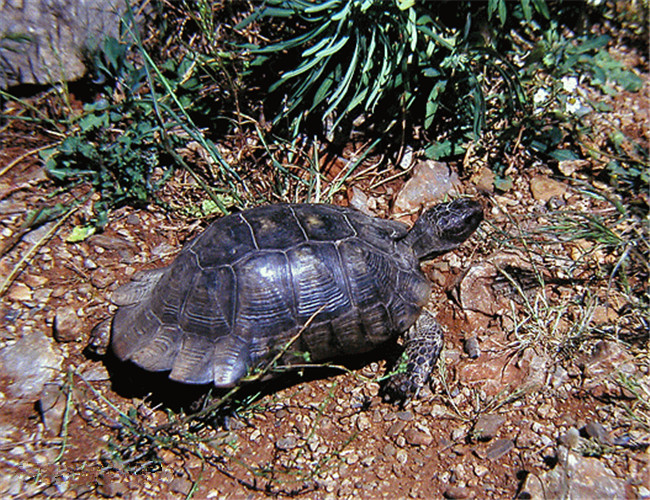
The marginated tortoise (Testudo marginata) is the largest of the Mediterranean tortoises, native to Greece, southern Albania and Sardinia. It brumates in winter – many owners skip hibernation, which is harmless to its health.
SOURCE NOTE: the source spelled the name ‘Testudomarginata’; the correct binomial is Testudo marginata. Males develop a broad, flared (‘marginated’) rear shell.
2 Appearance
Adults 30-35 cm, ~5 kg; males larger with a concave plastron and thick long tail. The black carapace quickly absorbs scarce mountain sun to maintain body heat. The signature feature is the rear marginal scutes flaring out like a fan (most pronounced in males, absent in hatchlings) – unique among tortoises.
3 Care & Temperament
Relatively easy, but brumation is risky – they can die overwintering. Mediterranean tortoises brumate from mid-March to early October; the safe minimum is 4-5 C (ideal) and they wake above 6 C. They may carry antifreeze sugars. Brumation is beneficial but protect the site from rats and snakes, which kill tortoises.
4 Habitat & Environment
Outdoors in summer (large, predator-free, with edible shrubs/weeds, shade and a shallow water dish) they thrive; they dig, so bury the fence. Indoors use a wide tortoise table with heat + UVB and a cooler zone (basking 32-35 C). Substrate is 50/50 topsoil and children’s play sand with a dry-grass feeding/digging area; keep juveniles more humid to avoid dehydration.
5 Diet & Feeding
Mainly weeds and asters; wild juveniles eat snails and earthworms, becoming more herbivorous with age. Feed varied weeds, leaves and flowers (dandelion, plantain, mallow, chicory, hibiscus, mulberry, alfalfa, clover, lettuce, opuntia, occasional squash/tomato). Avoid cat/dog food and limit fruit. Dust vitamin once and calcium several times weekly; water always available.