Hyla Rabbit
2 Photo Gallery
1 Hyla Rabbit Breed Overview
The Hyla Rabbit is a world-famous meat rabbit breed, introduced to China not long ago. It is the world-recognized meat rabbit breed with the highest meat yield, with delicious meat. The Hyla Rabbit consists of four lines, with different appearances among lines.
Chinese Name: Hyla Rabbit
Kingdom: Animalia
Phylum: Chordata
Subphylum: Vertebrata
Class: Mammalia
Order: Lagomorpha
Family: Leporidae
Genus: Oryctolagus
Species: Hyla Rabbit
Origin: France
Line classification: The Hyla Rabbit consists of four lines A, B, C, D, successfully bred by the French company Mok in the late 1970s.
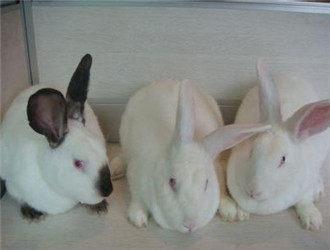
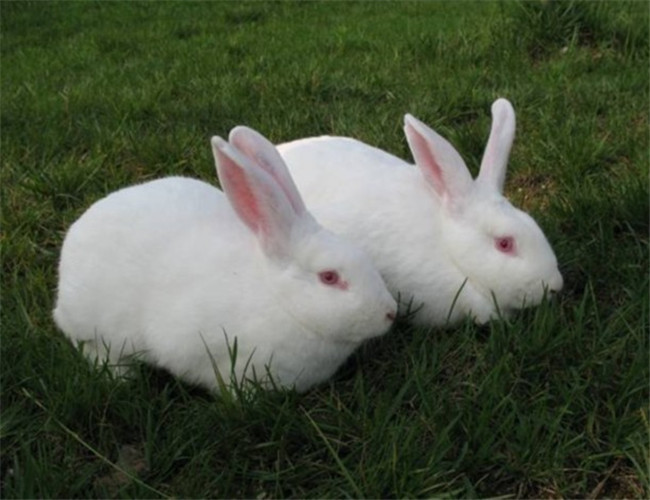
Appearance: Line A is all white except black ears, nose, limbs, and tail; Line B is all white except black ears, nose, limbs, and tail; Line C is all white; Line D is all white. Pink eyes, broad round thick short head, upright ears, full hips, well-developed loin and rib muscles, sturdy limbs.
Habits: The Hyla Rabbit’s general temperature requirement is 5–30°C, optimal 15–25°C, relative humidity 60%–70%, and light needs 14–16 hours daily; in winter with insufficient light, install bulbs in the house for artificial supplementation.
Production performance: Line A adult weight—male 5.0 kg, female 4.7 kg; Line B—male 4.9 kg, female 4.3 kg; Line C—male 4.5 kg, female 4.3 kg; Line D—male 4.6 kg, female 4.5 kg.
2 Physical Characteristics of the Hyla Rabbit
The Hyla Rabbit’s appearance differs among lines, and adult size varies; crossbreeding among lines produces even better offspring—the so-called heterosis (hybrid vigor).
The Hyla Rabbit, also called the Hyla matched-line meat rabbit, is a hybrid breed developed by the French European Rabbit Company in the late 1970s, consisting of lines A, B, C, D. It was bred from nine original breeds through different cross-combination selection trials. Its most notable feature is a high dressing percentage, up to 59%—the highest among meat rabbits—with tender meat and an average adult commercial weight of 4.5 kg. Adult weight: 5.0 kg; daily gain: 50 g.
Line A is all white except black ears, nose, limbs, and tail; Line B is all white except black ears, nose, limbs, and tail; Line C is all white; Line D is all white. Pink eyes, broad round thick short head, upright ears, full hips, well-developed loin and rib muscles, sturdy limbs.
Line A adult weight—male 5.0 kg, female 4.7 kg; Line B—male 4.9 kg, female 4.3 kg; Line C—male 4.5 kg, female 4.3 kg; Line D—male 4.6 kg, female 4.5 kg.
3 Hyla Rabbit Care Tips
The Hyla Rabbit is a typical meat breed, suited to large intensive farms for introduction and keeping, maximizing its high meat yield and allowing dedicated staff for breeding, generating economic benefit.
I. Initial Procedures After Introducing Parent-Stock Matched Lines
1. Prepare cage equipment, drinking systems, etc., matching the number of breeding rabbits in advance.
2. In cold seasons, bring the rabbit house temperature to 15–25°C.
3. Carefully lift the breeding rabbits from the transport vehicle and accurately record quantity, batch, and ear numbers, loading from inside out into cages in order.
4. First feeding suggested 50–100 g; ensure ample water, adding electrolyte vitamins to the water tank (reduces dehydration and helps recover strength).
5. For 2–4 hours after the breeding rabbits enter the house, personnel should not enter to disturb the flock.
II. Immunization and Medicinal Prevention for the Flock
First, for breeding does not yet at immunization age, vaccinate before mating with rabbit hemorrhagic disease and Pasteurella bivalent vaccine, Clostridium perfringens vaccine, and E. coli polyvalent vaccine—preventing abortion from vaccination during pregnancy and raising neonatal immunity. Second, for 30-day-old weaned kits, regularly add robenidine, olaquindox, or sulfonamides to feed to prevent coccidiosis, stomatitis, and E. coli disease. After 40 days, promptly inject rabbit hemorrhagic disease, Pasteurella, Clostridium perfringens, and E. coli polyvalent vaccines, 2 ml subcutaneously each time, with 5–7 days between each vaccine. Breeding rabbits then vaccinated once every 4 months, 2 ml each time.
III. Feeding the Parent-Stock Matched-Line Does
Use a lactating doe formula feed. Daily energy about 370 kcal/kg, i.e., about 140 g daily. Minimum standards for lactating feed: protein (total nitrogen ingredients) 17%, easily digestible lysine 0.8%, methionine-cystine 0.6%, energy (digestible energy kcal/kg per INRA method) 2600, fat 3%, vitamin A 10,000 IU/kg, vitamin D3 1,000 IU/kg, vitamin E 50 mg/kg.
4 Hyla Rabbit Living Environment
The Hyla Rabbit’s environmental requirements are not strict—just follow some necessary principles, such as that the Hyla Rabbit does not like overly hot environments, and adult rabbits are best kept singly. A brief introduction follows.
The Hyla Rabbit’s general temperature requirement is 5–30°C, optimal 15–25°C, relative humidity 60%–70%, and light needs 14–16 hours daily; in winter with insufficient light, install bulbs in the house for artificial supplementation.
When keeping the Hyla Rabbit, breeding rabbits must be kept singly per cage, and commercial rabbits 5–6 per cage—not too crowded, as overcrowding harms the rabbits and slows growth. The Hyla Rabbit is herbivorous, so feed mainly greens with concentrate as supplement; but in winter and spring when greens are scarce, appropriately feed more concentrate—mainly pellets mixed from soybean meal, corn, and bran—and also feed more carrots.
5 Hyla Rabbit Feeding Guidelines
Open the nest of does that kindled a few days earlier. Check whether all kits have nursed, then count and finally balance the number per litter. Over the next few days, at a fixed morning time, open the nest to check whether kits have nursed. Kits hidden inside that show no reaction to your hand near them are a sign of good nursing. Kits start learning to eat feed at about 18 days of age.