Checkered Giant Rabbit
2 Photo Gallery

1 Checkered Giant Rabbit Breed Overview
Checkered Giant Rabbit (details)
The Checkered Giant Rabbit is a type of large rabbit. Usually a meat breed, in recent years more people have come to like its cute looks; even though it is large, many keep it as a pet.
Chinese Name: Checkered Giant Rabbit
Chinese Alias: Giant Checkered Rabbit
English Name: Checkered Giant
Reproduction: Viviparous
Origin: Europe
History: The Giant Checkered Rabbit appeared in 1904, when a German man named Otto Reinhardt crossed the Reinish Checker Rabbit with the black Giant Flemish Rabbit, producing this unique breed—the Giant Checkered Rabbit. The first Giant Checkered Rabbit was imported to the United States in 1910.
Body Features: A large rabbit over 5 kg, with looks similar to the Himalayan Rabbit but leaner, though larger in build.
Diet: Herbivorous
Recognizing Association: American Rabbit Breeders Association (ARBA).
2 Physical Characteristics of the Checkered Giant Rabbit
Checkered Giant Rabbit (details)
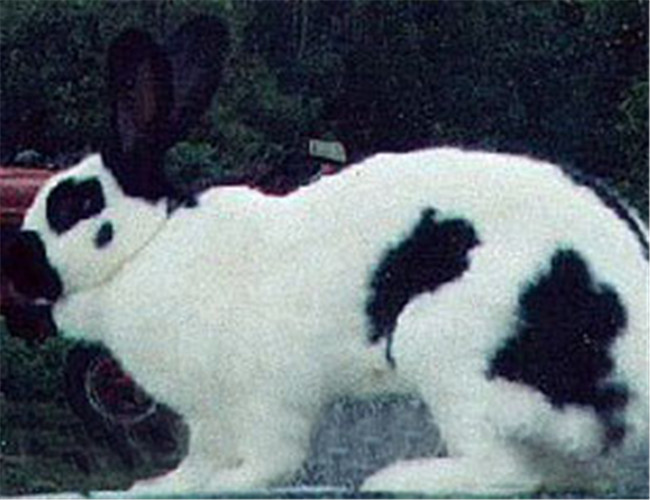
The Checkered Giant Rabbit’s fur is white with scattered black spots. It is large but has a low meat yield. It has broad, upright ears, usually black; black eyes; and strong, powerful limbs.
The Checkered Giant Rabbit is a large breed over 5 kg, with looks similar to the Himalayan Rabbit but leaner, though larger in build.
Although the Giant Checkered Rabbit is a large breed and usually used as a meat rabbit, this naturally distinctive rabbit is instead less used for meat; most meat rabbits are still the Giant Flemish and Giant Chinchilla (though there is nothing to be proud of). The Checkered Giant more often appears at rabbit shows, traveling the world and shining.
Not only its use and looks differ from others—the Checkered Giant’s personality is also rebelliously different from ordinary rabbits. Full of self-awareness, it is not hard to control because of its size, but because of its innate individuality some even feel it is nothing like a rabbit’s naturally sociable nature. It is no surprise that it is active and playful; what is unusual is that it loves to show off and attract attention, like a born star, every movement full of a special aura.
3 Checkered Giant Rabbit Care Tips
Checkered Giant Rabbit (details)
The Checkered Giant Rabbit has a quirky personality; it will not obediently listen like other pet rabbits, nor deliberately please people like a baby rabbit. Being a large breed, it is jealous and likes larger living space, so extra care is needed.
I. Personality Traits of the Checkered Giant Rabbit
The Checkered Giant Rabbit has a strong personality and needs the owner’s full attention. So if you keep one, keep just one, lest the rabbit feel unvalued or jealous of sharing the owner’s love with others. In care, because it is smart and active and needs much exercise, give it more activity or games—toys or games you invent—and the rabbit will be happy.
II. Living Space for the Checkered Giant Rabbit
Of course, such a rabbit needs larger living space. Curious, it prefers free exploration areas to a small boring cage. So if the owner likes outdoor sports or is warm and active, the Checkered Giant Rabbit will surely satisfy your special, different needs.
4 Checkered Giant Rabbit Living Environment
Checkered Giant Rabbit (details)
Although the Checkered Giant Rabbit is a large pet breed, it cannot change its timid nature. A newly arrived Checkered Giant is usually a juvenile and most easily startled, so provide a quiet space.
I. Helping the Rabbit Adapt to a New Environment
Rabbits are at the bottom of the food chain, so they are very timid and cautious, and very sensitive to environmental change. A new home and new owner cause some fear, so give them time and space to adapt.
The death of a young rabbit is often suspected to be coccidiosis or the like, but in fact many are literally scared to death, or fall ill from fright—rabbit digestive disease (diarrhea or bloat) always has “stress” among its causes.
II. The Right Approach
Put it in a prepared cage with food, hay, water, a litter box, and toys (or chew wood). Place the cage in a quiet corner of the room; do not disturb much. You may watch or refill water and food, but move gently. If there are cats or dogs at home, train them too—rabbits naturally fear predators, so isolate them and let them adapt slowly.
Let the rabbit stay quietly; at least 24 hours, then gently stroke it, talk to it, call its name. Give a quiet small room so the rabbit can come out and move.
Each rabbit’s adaptation time differs; observe. If it is lively, eats when you are near, and has alert eyes, it is adapting well. If it always curls in a corner, nervous, even trembling, then truly leave it alone.
5 Checkered Giant Rabbit Feeding Guidelines
Checkered Giant Rabbit (details)
The Checkered Giant Rabbit is huge, with a huge appetite, so do not panic when choosing food; even at any time, do not casually toss it other foods. Its food is simple, introduced below.
I. The Staple Should Be Hay
The Checkered Giant Rabbit’s main hay should be Timothy hay (a grass family) or Orchard grass. Alfalfa should be gradually reduced as the rabbit nears adulthood (about 4–5 months) and increased in grass-family hay; after 6 months (adult) alfalfa stops entirely. Hay supply and notes are the same as for young rabbits.
II. Feed Together with Rabbit Pellets
Choose adult rabbit pellets for the Checkered Giant Rabbit, preferably pet rabbit pellets. Suggest twice daily; start with a full handful each time. If it finishes quickly and seems hungry, add some. Notes are the same as for young rabbits, not repeated. Rabbits vary individually; you know your own best—set the amount by observation.
III. Drinking Water Is Essential
Provide boiled, cooled water 24 hours a day; change at least once daily.
IV. Vegetables in Moderation
Adult rabbits can eat some vegetables, helping the gut retain moisture and adding vitamins. Supply moderately—too much, or using vegetables as staple food, can easily cause diarrhea.