Florida White Rabbit
2 Photo Gallery

1 Florida White Rabbit Breed Overview
Florida White Rabbit (details)
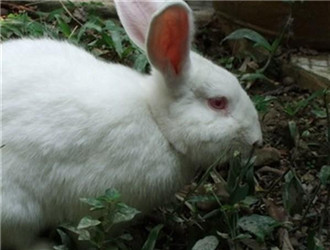
The Florida White Rabbit is just an ordinary white rabbit, medium-sized, with all-white fur. Because it has no pigment, its eyes are red, and it is kept in large numbers worldwide as a very common rabbit breed.
Chinese name: Florida White Rabbit
Chinese alias: Florida Rabbit
English name: Florida White
Kingdom: Animalia
Phylum: Chordata
Class: Mammalia
Order: Lagomorpha
Family: Leporidae
Genus: Oryctolagus
Species: Florida White Rabbit
Origin: Florida, United States
Reproduction: Viviparous
Physical traits: Weight 1.8–2.7 kg, all white, short body
Diet: Herbivorous
Recognized by: American Rabbit Breeders Association (ARBA).
2 Florida White Rabbit Physical Characteristics
The Florida White Rabbit is an early-maturing small breed; newborn kits weigh 35–50 g; at 30 days weaning weight is 300–450 g, at 3 months 1.2–1.3 kg; adult does 2.2–2.5 kg, bucks 1.8–2.3 kg. Fertility is strong, mainly shown in a high ‘blood-mating’ conception rate (80%–90%), 6–8 litters per year, averaging 6.5 kits. Good adaptability and disease resistance make it ideal breeding material.
3 Florida White Rabbit Care Tips
Florida White Rabbit (details)
The Florida White Rabbit’s care is like many rabbit kinds; it likes a clean environment and green food. When keeping it, note its habits and let it gradually adapt to living with its owner.
I. What the Florida White Rabbit eats
The Florida White Rabbit is a vegetarian, liking carrots, cabbage, Chinese cabbage, greens, cucumbers, rapeseed leaves, and also dandelion and plantain. It also eats many kinds of grass. Wash and dry vegetables before feeding; never give wet greens, or the Florida White Rabbit will get diarrhea.
II. The Florida White Rabbit’s cage
The Florida White Rabbit suits a ventilated, dry place; a too-damp environment easily makes it sick. It does not tolerate heat and humidity; if caged, the front and sides should use wire mesh for good airflow, with something under the cage to catch waste. Note that the Florida White Rabbit’s urine is very smelly, so the owner should be able to tolerate this, or consider not keeping one.
III. The Florida White Rabbit’s habits
The Florida White Rabbit loves to run and jump; let it out sometimes to be more lively and cheerful. It sometimes eats hard things like cardboard boxes and wood—this is teeth grinding, so do not worry. A newly bought baby Florida White Rabbit is too small for a bath.
IV. The Florida White Rabbit’s droppings
The Florida White Rabbit’s droppings are hard, black pellets, sometimes soft ones, which the rabbit may eat again to absorb the nutrients before excreting.
4 Florida White Rabbit Living Environment
Florida White Rabbit (details)
An important issue in keeping the Florida White Rabbit is environment layout, related to its health—cage setup, food bowl choice, etc. Some suggestions follow.
1. Cage selection for the Florida White Rabbit
It must be large and comfortable, and prevent escape! Many cat and dog cages on the market are unusable—gaps too big, so small Florida White Rabbits escape; bottom gaps too big, so they fall through and get urine on their feet! A too-shallow base is a fatal flaw—urine and droppings still get outside. So a professional rabbit cage is advised! Cages have wooden or metal floors; choose by preference—wood is comfortable, metal easy to clean.
2. Florida White Rabbit food bowl
Bowls are tip-proof or fixed. Tip-proof ones (Lux brand) have pretty stripes on top; fixed ones are AB brand. These two are most liked and bought.
3. Florida White Rabbit hay rack
With a hay rack, hay is saved and not wasted! AB’s and PETLINK’s AM070 are internally hung; externally hung PETLANK AM051 are also good.
4. Florida White Rabbit water bottle
Many sizes, from Dayang and PETHOME. A bottle is convenient, clean, and spill-resistant! Note: the water for the Florida White Rabbit must be cooled boiled water, purified water, or mineral water—never unboiled tap water!
5. Florida White Rabbit chew items
If the teeth grow too long, it affects eating and causes mouth inflammation!
5 Florida White Rabbit Feeding Guidelines
Florida White Rabbit (details)
The Florida White Rabbit’s food is mainly vegetarian—hay, vegetables, turtle food, and pellets, usually pellets and hay as staples, snacks as supplement. Also note feed-change cautions; do not change suddenly.
I. Pellet selection
The most necessary thing for the Florida White Rabbit is a staple feed, designed for its stomach, body, and eating habits, helping growth well. Domestic feeds are imported or local, with many brands.
II. Hay selection
Indispensable: alfalfa, timothy, dandelion grass, mint grass, and many more, many brands. Recommended supply without limit, 24 hours.
III. Feed-change notes for the Florida White Rabbit
1. Reasons to change feed: growth stage change (baby => adult => senior), over-long teeth needing abrasive feed, too fat or thin, disease (e.g., urolithiasis), environment change (adoption or found), wrong feed used (meat-rabbit feed or none), new product, or owner’s whim.
2. Change feed over seven days:
Day 1: old:new = 1:3
Day 3: old:new = 1:2
Day 5: old:new = 1:1
Day 7: all new feed
3. During the change, observe intake and the old:new ratio, and judge the effect by dropping size, color, and shape. If diarrhea or total refusal occurs, re-examine the ratio and adaptability.