Search Results
361 results for “warmth care”

Dark-eyed Self White Guinea Pig
The Dark-eyed Self White guinea pig, like all guinea pigs, is lively, gentle, and chubby, easily startled and prone to squeaking. It loves a dry, clean environment. Also known as the white black-eyed Dutch pig or cavy, it is a common and easy-to-care-for small pet.
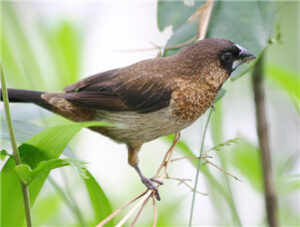
White-rumped Munia
In old times, street fortune-tellers often carried caged birds that would pick out prophecy slips, calling them 'magic sparrows' to deceive people. That 'magic sparrow' was the White-rumped Munia, a seed-eating bird that is bold and tame and easy to keep in a cage.

Why Is My Dog Constantly Shivering
Constant shivering in dogs can signal fear, cold, poisoning, or illness. A scared or cold dog needs comfort and warmth; poisoning (from plants like morning glory or cleaners) brings foaming and stiffness and needs emergency vet care; underlying disease such as distemper, epilepsy, or kidney failure also causes trembling. If the cause is unclear, see a vet.

Hoffman’s Conure
The Yellow-winged Parrot (Hoffman's Conure) belongs to the order Psittaciformes, family Psittacidae. The body is green; the forehead, crown, nape, the area between the eye and bill, and the cheeks have yellow edges; the ear coverts are red. It mainly inhabits forest edges, especially dense woodland and secondary vegetation at tropical and subtropical elevations of 500-3,000 m.

Siberian Chipmunk
The Siberian Chipmunk has the habits of storing food and hibernating; hibernation occurs in the wild, while in warm indoor captivity it does not need to hibernate. Wild chipmunks are mainly distributed in North China, Northwest China, and Northeast China. Their fur is of good quality and attractive.

Chinchilla laniger
The Chinchilla laniger (Chinchilla laniger) is native to the Andes Mountains of South America, where it lives in caves and rock crevices at about 1,600 m elevation. Its appearance resembles that of a rabbit and a squirrel. A special feature is its pair of large, bright, ruby-red eyes, which are beautiful.

Yellow-naped Amazon
The Yellow-naped Amazon is a parrot with outstanding talking ability; with proper training it can be truly astonishing. However, although it talks well, it can also be very noisy, so before keeping one you must be sure it will not disturb you or those around you. Of course, it has quiet moments too - for example, wild Yellow-naped Amazons are very quiet while foraging.

Crossbill
The Crossbill, also called the crossbill or green crossbill, currently has three subspecies. Its most distinctive feature is the crossed upper and lower mandibles, used to pry open pine cones and extract the seeds.

Slow Loris
The Slow Loris (Loris tardigradus) is a small prosimian of the family Lorisidae and genus Loris. It is nocturnal, moves slowly, and prefers to rest atop tree branches. In recent years, due to habitat destruction, hunting for use in traditional medicine, overhunting, and its own biological traits, it is on the brink of extinction.
When Do Budgerigars Molt, and What Are the Signs
Budgerigars typically molt in June–August for 2–3 months and again about four months later to grow winter down. Signs include frequent feather loss, poorer appetite with some weight loss, and moody, sensitive behavior. Because molting birds are fragile and parasite-prone, feed a varied balanced diet and deworm if you see red, scabby skin or feather-pecking.