Search Results
435 results for “swollen eye”
My dog’s eye is bleeding and its face is swollen after I hit it too hard—what should I do?
If your dog's eye is bleeding after a blow, first press a gauze pad gently on the wound to stop the bleeding, then rinse the blood around the eye with saline so you can assess the injury. For superficial skin wounds around the eye, disinfect with povidone-iodine and apply a topical antibiotic ointment; if the eyeball itself is damaged, go to the vet at once. Fit an Elizabethan collar to stop your dog from scratching and causing infection.

What to Do When Your Dog’s Eye Is Swollen
A swollen dog eye can stem from a foreign object, heat, injury, blocked tear ducts, infection, or allergies. Flush out debris, adjust diet, use vet-approved eye drops, and see a veterinarian if it doesn't improve or an allergy is suspected.

Why Is My Kitten’s Eye Suddenly Swollen?
A suddenly swollen eye can mean a viral infection like distemper, contagious conjunctivitis, or a simple bacterial infection. Each needs a different approach, so identify the cause first — antibiotic drops for infection, vet care for anything with other symptoms.

Red, Swollen Dog Eyes That Won’t Open
Red, swollen eyes that will not open can come from heat, a foreign object, infection, eyelid inversion, keratitis, or corneal ulcer. Work out the cause, then use the right drops or see a vet, since some need surgery.
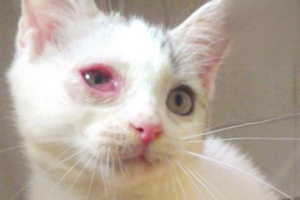
Why One of Your Cat’s Eyes Is Suddenly Red and Swollen
A cat with one red, swollen eye is usually reacting to conjunctivitis, a localized bacterial infection, or — less commonly — an internal viral illness such as panleukopenia. Matching the right treatment to the cause matters, because randomly applying eye drops can make the problem worse. Watch for other symptoms such as digestive upset, and see a vet if the eye does not improve.

Why Does My Dog Have Lots of Eye Discharge and Low Energy?
Eye discharge plus lethargy in a dog usually points past ordinary eye irritation to either a gastroenteritis-type cold or canine distemper. The cold brings fever, runny nose, and possible vomiting or diarrhea; distemper starts like a cold then shows biphasic fever and thick eye discharge. Get a vet diagnosis before treating, and don't self-prescribe antibiotics.

Why There Is a White Film Over Your Puppy’s Eye
A white film over a puppy's eye is usually keratitis — corneal inflammation from injury, infection, or allergy. Clean the eye, apply antibiotic drops and atropine, and see a vet, since eye conditions are hard to distinguish at home.

What to Do If Your Dog Has Eyeworms
Eyeworms (Thelazia callipaeda) are milky-white nematodes that live beneath a dog's eyelids and are transmitted by flies, causing tearing, redness, and corneal ulcers. They are cleared with pet-safe eyeworm drops such as levamisole, followed by flushing and antibiotic ointment, or removed by a veterinarian.

Why Your Cat Has a Lot of Eye Discharge and How to Handle It
Excess eye discharge usually means dietary heat, eye inflammation, or a herpesvirus infection. Clean the eye and use the right drops, and boost water intake with fountains, extra bowls, and broth.

Hair Loss and Redness Around a Dog’s Eyes
Hair loss and redness around a dog's eyes depends on the cause: one is natural hair shedding exposing the skin; the other is hair loss from itching. The former is mostly caused by diet, the latter mostly by bacterial and parasitic infections. To know the exact cause, the owner should find the underlying reason.