Search Results
1216 results for “stress”
What does a cat’s stress reaction mean?
Cat stress is the body's response to fright: initial tension followed by an immunity drop that can cause serious illness. Avoid frightening cats and comfort them through changes.
What are a cat’s stress reactions?
Cat stress shows as trembling, appetite loss, and digestive upset, and in severe cases vomiting or breathing difficulty. Reducing environmental change helps prevent serious health effects.

Are Timid Cats More Prone to Stress?
Timid cats really do stress more easily, spooking at small noises or changes like a stranger visiting or rearranged furniture, and a stress response can range from hiding to vomiting, diarrhea, fast breathing, or even urinary blockage and, in extreme cases, death. Stress is a physical and mental reaction that puts the body on alert and, if prolonged, can damage organs or cause sudden collapse. Timid cats tend to be emotionally rich and very sensitive to environment change, so the fix is a stable, quiet home with few surprises, plus gradual socialization to build confidence. After a stress episode, give space and only comfort once calm; seek a vet if signs are severe or persist.
What to Do When Your Hamster Is Stressed
Stress harms a hamster's well-being. A frightened hamster may freeze, refuse food and water, and gnaw the cage bars. Acting quickly to calm it protects its health. First give it a safe, quiet, comfortable space and avoid more scares; offer fresh water and favorite foods to distract it, and add safe items to burn off energy. Because hamsters are nocturnal and easily startled, a calm, warm home and gentle daily interaction—or a companion—help prevent stress in the first place.
Signs a Hamster Is Stressed or Scared
Hamsters are sensitive, fragile animals that may feel stress from changes in environment, food, or noise. When frightened they may go tense, tremble, raise their tail, and bristle their fur; they try to hide or curl up, may shake or circle, and can bite the cage, scream, or bite people. Move the cage to a safe, calm place away from noise and light, add hides and toys, and never force contact while the hamster is frightened.
How Cats Show Stress and Why It Matters
A trigger can be noise, a stranger, travel, or a move, and each cat reacts differently. Hiding, hissing, even sudden aggression are normal first responses, while deeper stress brings appetite changes, soft stools, or vomiting. Beyond discomfort, strong stress lowers immunity and can unmask hidden disease, so calm, patient handling matters most.
Cat Stress Reactions and How to Ease Them
Stress is the most common feline behavior problem and a driver of many diseases. Triggers include new homes, vet or grooming visits, noise, household changes, and resource competition in multi-cat homes. Signs range from acute fear to chronic hiding, over-grooming, and aggression. Ease stress with a calm space, play, pheromones, and a vet check.
How to Prevent Tape-Sticking Stress in Cats
If a cat steps on tape or gets sticky paper on a front paw, it shakes the limb frantically, panics, and bolts—because the paw pads are vital for shock absorption, sweat-cooling, scent marking, and balance. Losing that sense is disorienting, even nauseating. You can desensitize the cat with gradual training: while petting to keep it calm, wrap tape on the paws, then soothe until it stops shaking, repeating until it calmly removes the tape with its mouth. Household 'sticky traps' then cause far less chaos—and less furniture damage.
Is a ‘Bald’ Spot on Your Cat’s Head a Sign of Stress?
Owners sometimes notice thinner fur on the sides of a cat's head (between the eyes and ears), especially in short-haired cats, and worry the cat is going bald from stress. Usually it's normal: those are scent-gland areas where many cats naturally have sparser coats. But hair loss can also be pathological—most often ear mites or ringworm. Ear mites leave dark brown discharge and itch; ringworm is a fungal infection causing round bald patches with redness and flaking. Compare the signs and see a vet early, isolating the cat if you have several.
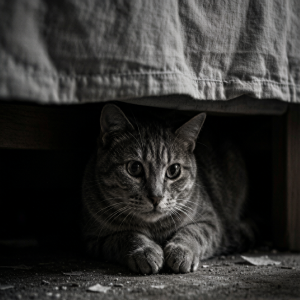
Cat Stress: Signs and What to Do
Basic knowledge about stress reactions in cats.