Search Results
104 results for “ringworm”
Cat Ringworm and Stubborn Skin Issues: How to Choose Treatment
Ringworm (dermatophytosis, often Microsporum canis) is famously stubborn and recurrence-prone, and the usual reason is that a surface-only spray never reaches the fungi hiding in the dermis—so it looks better for a day or two, then flares again. Human products can also irritate cat skin. The practical rule is to match the treatment to severity: a broad-spectrum antiseptic spray for early mild spots, a terbinafine spray for a confirmed simple fungal infection, and a ketoconazole-plus-metronidazole ointment when the lesion is ulcerated, smelly, and mixed with bacteria. This article explains why ringworm recurs, how to pick by stage, and the cautions (licensed products, environmental cleaning) that actually stop it coming back.
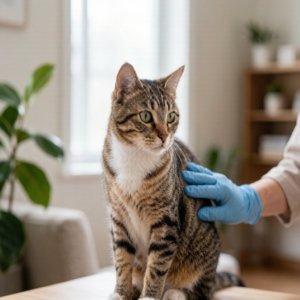
A Cat Ringworm Case: Diagnosis and Treatment
A 5-month Ragdoll with an oval bald patch, scales, and mild crusting on the neck turned out to be ringworm—confirmed by a Wood's lamp and typical signs. Treated with fur-clipping, cleaning, an antifungal spray and ointment, vitamin B, and an E-collar, he improved within a week. The case shows why vet confirmation and full-course treatment matter.
Is Terbinafine Spray Effective for Cat Ringworm?
Terbinafine spray is a first-line antifungal and does help mild, surface ringworm—but it can't reach deep follicles, so it won't cure every case and shouldn't be used long-term. For larger or deep infections, combine it with medicated baths and oral antifungals under veterinary guidance. Clip, disinfect, and protect the skin, and always confirm the diagnosis first.
What Does Ringworm Look Like Under a Wood’s Lamp?
When a cat loses fur, flakes, or develops bumps, many owners grab a flashlight to check for ringworm—but a normal torch shows nothing. Only a Wood's lamp makes the fungus fluoresce, and even then you can be fooled by false positives. Learn what true apple-green glow looks like, the classic symptoms, and why a negative lamp never rules ringworm out.
What to Do When Your Cat Gets Ringworm
Ringworm is a common skin problem in cats, especially in newly adopted kittens, and while not deadly it is stubborn: mild cases clear in two to three weeks, but it can linger and relapse for three to four months. About 98 percent of cat ringworm is caused by the fungus Microsporum canis, which shows as round patches that shed hair and crust, itches, and spreads as spores travel. Because it can pass to people, control means antifungal medicine, immune support, thorough disinfection, sunlight, isolation from other cats, and care to avoid human infection.
Ringworm in Cats and Dogs: Symptoms and Treatment
Ringworm, or dermatophytosis, is one of the most common skin diseases in pets, caused mainly by Microsporum canis, M. gypseum, and Trichophyton mentagrophytes. It matters for public health because most strains are zoonotic, survive for three to four years in dry conditions, and resist ordinary disinfectants. Infection spreads by contact or contaminated objects, peaking in warm, humid weather. Signs are round patches of hair loss, redness, and scaling, usually without itch. Treatment uses topical and, for widespread cases, oral antifungals, plus environmental cleaning. This guide covers the cause, signs, and care.
How to Cure Cat Ringworm for Good
Ringworm is simply a fungal infection, so curing it means attacking the fungus at its root while strengthening the cat's own defenses. Some cats in the same home get it and others do not, and the difference is immune strength. This guide explains why ringworm appears, how to treat mild and severe cases, and how to stop it from coming back by boosting immunity and keeping the environment clean.
Is this ringworm on my cat?
The photo strongly suggests ringworm. Confirm with a Wood's lamp (green fluorescence). If positive, use antifungal medication after shaving the surrounding fur; see a vet if unsure.

Can Povidone-Iodine Cure Cat Ringworm?
Povidone-iodine has broad antimicrobial action but does not reliably kill the fungi that cause ringworm, so it is only a supportive measure. True antifungals, either topical or veterinary-directed oral azole medication for severe cases, remain the main treatment.

Home Care for Cat Ringworm: Practical, Low-Cost Treatment
Ringworm, or dermatophytosis, is a fungal skin infection in cats caused mainly by Microsporum canis. Mild cases respond to topical antifungals, B-vitamin support, sunlight, and environmental disinfection, while widespread disease needs medicated baths and veterinary-directed oral antifungals.