Search Results
11 results for “puzzle feeder”
How to get a Teddy to sleep peacefully?
A Teddy may not sleep for many reasons; if it slept too much by day, walk or play after dinner to tire it. A sensitive nose and ears mean a noisy spot keeps it awake, so put its bed in a quiet corner. Midnight hunger also keeps it up, so leave food in a puzzle feeder.
How to get a dog to sleep?
A dog may not sleep from an unfamiliar environment, insecurity or too much daytime sleep. For a new dog, put its bed by yours and pat it; for day-sleepers, play and walk more, then a half-hour evening walk to tire it. Hungry dogs may cry at night, so leave food in a puzzle feeder.
What If Your Cat Eats Only Treat Sticks and Refuses Kibble?
A cat that eats only treat sticks (cat paste) and skips kibble risks nutritional imbalance, weak immunity, and obesity, since these snacks are low in complete nutrition and high in fat. Wean gradually: mix 30% treat stick into kibble days 1–3, 15% days 4–7, 5% days 8–10, then kibble alone. Add play and puzzle feeders to build appetite. If the refusal is sudden with lethargy or weight loss, see a vet for stomatitis or illness.
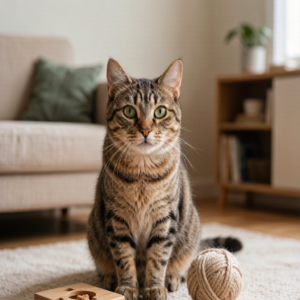
Is Your Cat Smart? Simple Tests and How to Boost Feline Intelligence
Cats, like people, vary in problem-solving speed and learning ability. You can gauge yours at home with three lighthearted tests: a "sock test" (how fast it frees itself), a "treat test" (whether it figures out how to reach a snack from an OK-sign hand), and a litter-box test (how it reacts to an un-scooped box). Some breeds, such as Siamese, Bengal, Ragdoll, and Maine Coon, are known for sharper social or spatial skills. To nurture intelligence, spend 30 minutes daily on hunting-style play, offer puzzle feeders, and rotate furniture layout, but keep training gentle to avoid stress.
How Cats Eat and Drink: Healthy Habits
In the wild a cat eats up to twenty small meals a day, so free access to food suits its nature better than one or two big bowls. Feeding a single staple with the occasional treat, using puzzle feeders for mental stimulation, and placing water bowls away from food all mirror feline instinct. This guide covers sensible feeding and safe drinking setups for indoor cats.

What to Do When Your Dog Is a Picky Eater
Picky eating often starts with table scraps and home-cooked meals. Fix it by separating human food from kibble, scheduled feeding with a 10-15 minute window, more exercise, and puzzle feeders, and get the whole household to stick to the plan.

How Long Can a Cat with Dementia Live?
Feline dementia (Cognitive Dysfunction Syndrome) does not kill directly, but its complications shorten life. Mild cases (occasional confusion, sleep disruption) often live 3–5 more years with good care; moderate-to-severe cases (loss of self-care, refusal to eat, disorientation) may survive only 2–3 years; if chronic kidney or heart disease is also present, just 1–2 years. Japanese clinical data show cognitive training and a stable environment can extend life by 47%. Watch for the DISH signs—Disorientation, Interactions lost, Sleep flips, House-soiling—and support the cat with a low-stimulus home, short brain games, and targeted nutrition.

Why Does Your Cat Suddenly Dart Around the House?
When a cat suddenly tears around the house, pounces at empty air, or arches its back and puffs up, it is usually showing what veterinarians call Frenetic Random Activity Periods (FRAPS)—a normal behavior, especially in kittens and young cats. The triggers are mostly instinctual: a retained hunting drive, excess energy, stress, or heat in unspayed cats. Occasionally, frantic running signals a health problem such as hyperthyroidism, a neurological disorder, or a parasitic infection, particularly when paired with appetite loss, weight drop, or lethargy. Meeting the cat's exercise needs with toys and play, plus a calm, safe environment, keeps normal zoomies harmless and happy.
Why Your Spayed Cat Still Yowls
Spaying does not guarantee a quiet cat. Many owners are surprised when a neutered female still yowls at night or demands attention for no obvious reason. The cause is rarely the surgery itself and more often a mix of breed temperament, habit, unmet needs, or an underlying health issue such as an overactive thyroid. Here is how to read the behavior and what to do about it.
Feeding Schedule for Kittens Under Six Months
Good kitten nutrition is about more than food; it is a routine of fixed meals, light training, and play. Keeping a predictable daily schedule helps you monitor whether a kitten is eating normally and builds healthy habits early. This guide lays out how to choose the right food, portion it across breakfast, afternoon, and dinner, and use small training sessions to raise a well-adjusted kitten.