Search Results
25 results for “prey drive”

Why Does Your Dog Bite Your Pant Legs? (And What It Means)
When a dog grabs and tugs at your pant leg, it is rarely out of spite. Most often the dog is trying to get your attention, invite you to play, or signal a need such as an empty food bowl. The swaying fabric can also trigger an inherited prey drive, since a moving pant leg looks like something to chase. In some cases—especially when you pick up keys or put on shoes—it signals separation anxiety: studies show a large share of dogs chew scent-bearing items to soothe themselves when they sense you are leaving. The fix is consistency: ignore the behavior, reward calm following, offer chew toys, and meet the dog's exercise needs. Understanding the motive behind the bite is the first step to changing it, and learning your dog's other body-language cues helps you bond.
How to Tell If a Cat and Dog Can Live Together
Cats and dogs fight mainly because of their natures, so owners who want both should understand why they clash before helping them get along. Cats are solitary and wary, dogs are social and curious, and a dog's size and prey drive can frighten a cat. Their body language also differs: a dog's wagging tail is friendly, but a cat's is a warning. They also compete for food and attention. The good news is many learn to coexist with patience: raise them young together, give each its own safe space and feeding area, swap scents first, choose calm breeds, and stay neutral as the owner.
Why Dogs Chew Furniture and Steal Socks and Shoes
Destructive chewing usually starts with paper and books, then escalates to shaking like prey. Causes: boredom and curiosity (Huskies are infamous explorers), the teething phase at 16–24 weeks when sore gums drive chewing, and prey drive—left-on-the-floor shoes and clothes become 'prey' to shake and tear. Fixes: supervise and interrupt, train basic obedience with rewards, exercise the dog outdoors, give teething chews and a crate to block furniture, and redirect prey drive with tug ropes and scent mats instead of furniture.
What Dog Breeds Are Considered Dangerous or Aggressive?
Dangerous dogs are breeds known for strong aggression, high fighting drive, and difficulty being controlled. Examples include the Tibetan Mastiff, Dogo Argentino, American Pit Bull, Bull Terrier, Saint Bernard, Caucasian Shepherd, Croatian Sheepdog, and more. Because these dogs can threaten people and other animals, they are not recommended for densely populated urban areas, where an out-of-control dog could cause serious injury. Most dogs, however, are deeply loyal to their owners, and dangerous breeds are no exception. Owning one is possible, but only with dedicated, professional training to keep the dog under control. Without the patience and time such training demands, it is best to think carefully before bringing a powerful breed home.
Why Does My Cat Attack Me?
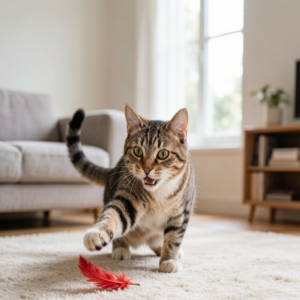
A cat that attacks its owner is often reacting to misunderstood play or training. Using hands or feet to play can teach a cat to treat body parts as prey, triggering its hunting instinct to strike. To prevent this, never encourage such play and redirect with a wand toy. Attacks can also be a bid for attention, in which case ignoring the behavior works best. Kittens that bite usually missed socialization training, which teaches them how to interact with people. Other causes include fear-based defense, pain or illness, and redirected anger. Reading the context helps you respond safely.
Pros and cons of the Chinese rural dog (Tugou)
Pros: unfussy eater, sturdy, alert guard dog, clean. Cons: plain looks, can bite strangers, may kill small livestock.
Why Are Cats So Good at Catching Mice?
Cats have a natural gift for catching mice, and it comes down to biology, instinct, and learned skill. As natural predators, they combine sharp hearing, a flexible body, retractable claws, and excellent night vision to track prey even in the dark. Their hunting instinct—inherited from wild ancestors—gives them quick reflexes and accurate judgment. Add powerful jaws and curved claws that pin a mouse instantly, plus a deep familiarity with rodent habits, and cats become formidable hunters. Even in modern homes, where catching mice is no longer necessary, that instinct survives—shown when a cat pounces on a toy or ambushes its owner in play.

Why Does Your Cat Suddenly Dart Around the House?
When a cat suddenly tears around the house, pounces at empty air, or arches its back and puffs up, it is usually showing what veterinarians call Frenetic Random Activity Periods (FRAPS)—a normal behavior, especially in kittens and young cats. The triggers are mostly instinctual: a retained hunting drive, excess energy, stress, or heat in unspayed cats. Occasionally, frantic running signals a health problem such as hyperthyroidism, a neurological disorder, or a parasitic infection, particularly when paired with appetite loss, weight drop, or lethargy. Meeting the cat's exercise needs with toys and play, plus a calm, safe environment, keeps normal zoomies harmless and happy.
How to Safely Cuddle Your Cat and Stay Healthy
Cuddling and nuzzling a cat - playfully called "sniffing the cat" - is a way owners show affection, and cats are uniquely cuddle-friendly because they barely smell. Unlike dogs, whose whole-body sweat glands make them rank without baths, a cat's scattered glands and constant self-grooming, plus sunbathing that kills bacteria, leave little odor. But close contact is not risk-free: diseases in cat feces or on the coat can pass to people. These include toxoplasmosis, cryptosporidiosis, and roundworm (mostly a kitten worry), plus Q fever from Coxiella burnetii, flea-driven skin allergies, and rarely rabies or hepatitis. Enjoy the cuddle, but wash up after, keep indoor cats' litter clean, and be extra careful if you are pregnant or unwell.
Why Do Cat Pupils Get Bigger and Smaller?
A cat's pupils are constantly resizing, and the change is driven mostly by light. In dim rooms the pupils open round to take in more, in normal indoor light they sit in a soft peach-oval, and in bright sun they narrow to a slit that gives the sharpest, most three-dimensional view — much like a camera aperture. A cat's pupils can change size about 135-fold, far beyond a human's roughly 15-fold. One warning sign to watch: if the two pupils are different sizes, it can point to high blood pressure, optic-nerve damage, or infection.