Search Results
1916 results for “pica”

Green Spotted Puffer
The green spotted puffer is a pufferfish living in near-coastal freshwater or brackish water, with a very special look. Shortened to GSP, adults reach about 10 to 18 cm and are classed as brackish-water fish.

Checkerboard Barb
As a juvenile the checkerboard barb has irregular black spots on its side that look like pieces on a chessboard, hence the name. It is easy to keep, lively, and can be mixed with small fish.

Blue Ram Cichlid
The blue ram cichlid is a gentle but rather shy tropical fish; keep it with plenty of plants for cover. Because the male's dorsal fin looks like a saddle, it is also called the seven-color saddle fish.
Red-lined Dwarf Cichlid
The red-lined dwarf cichlid is a dwarf cichlid famous for its red color, and it is fairly simple to keep with no special demands. It was named by Dr. Sven Kullander in 1979.
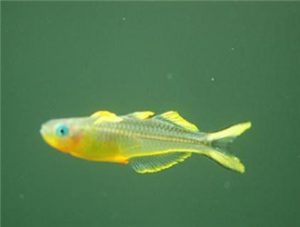
Forktail Blue-eye
The forktail blue-eye is a small rainbowfish with a pale blue-green, semi-transparent body that looks beautiful swimming in the aquarium, so it costs more than other rainbowfish.
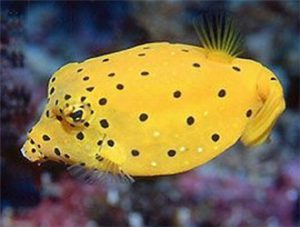
Papaya Fish
The papaya fish has a very special name and equally special looks. Its whole body is wrapped in a hard bony carapace that cannot move; only the mouth and caudal peduncle are free, so it moves very slowly.

Molly Fish
Like the guppy, the molly is a live-bearing fish, and by body shape it is roughly split into common and balloon types, so there are many molly varieties. Mollies are very gentle and can be mixed with other equally gentle ornamental fish.

Blind Cave Fish
The blind cave fish is a very special ornamental fish, born without eyes. Its ancestors lived mainly in caves, the deep sea, or muddy waters, and over generations the fish lost its sight; some are even born with eyes that soon vanish.
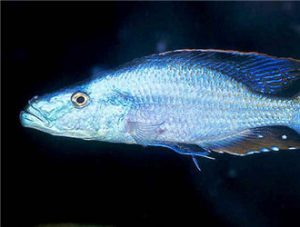
Malawi Eye-biter
The Malawi eye-biter, also called the horseface cichlid, reaches 25 cm as an adult and is native to Lake Malawi in East Africa. Its bizarre, knife-like face and compressed body make it a striking and popular cichlid.
Lloyd’s Lyretail
The Lloyd's Lyretail reaches 4–5 cm and is native to East Africa. Called one of the world's most beautiful tropical fish, it is also very hard to keep, among the hardest. Sensitive to hard water, its environment must be carefully managed.