Search Results
412 results for “new fish”

Why Do Goldfish Lose Buoyancy (Swim Bladder)?
Lost buoyancy (swim bladder disorder) is a common goldfish disease many owners meet. Signs include the fish lying on its side or upside down, floating at the surface or sinking to the bottom. This article focuses on the common causes of swim bladder loss in goldfish.

How to Prevent Swim Bladder Disease in Ornamental Fish
Swim bladder disease is common in ornamental fish; prevent it by controlling temperature and water quality. Many cases follow water changes with big temperature gaps — keep new and old water within about 2°C. If a fish loses buoyancy, isolate it in shallow water with a little salt, feed less, and if needed add a buoyancy aid.

Easy-to-Keep Aquarium Fish for Beginners
Cheap, hardy beginner fish include guppies, comet goldfish, ryukin goldfish, bettas, swordtails, zebra danios, tiger barbs, dwarf parrot cichlids, and mollies. They are tough, easy to keep alive, and inexpensive — ideal for new aquarists. Guppies and comets are top picks for newcomers because they adapt well, aren't picky eaters, and look good. Keeping fish alive is easy; keeping them well takes effort, so learn and improve as you go.

Why Is Your Fish Refusing Food? Causes and Fixes
Fish refuse food for many reasons: poor water quality, overfeeding/indigestion, illness (ich, enteritis), natural fasting, food boredom, sudden environmental change, or loneliness after losing tankmates. Fixes range from water changes and fasting to treating disease and restoring the school.
What Fish Can Live with Goldfish?
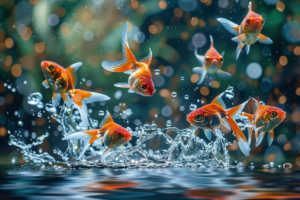
Goldfish are peaceful, social fish that tolerate 0–39°C but dislike sudden temperature shifts and prefer 20–28°C. Good tank mates are similar-sized, gentle, and share their water needs — such as guppy, angelfish, platy, tetra, and blood parrot, plus compatible goldfish varieties like Black Moor, Red Cap, Lionhead, and Ranchu.
At what age do small goldfish change color?
Soft-scale goldfish start changing at 1-2 months, hard-scale at 2-3 months. Speed depends on temperature, water, light, and nutrition.
How long for a Silver Arowana to adapt to a new tank?
Generally about 7 days to adapt, depending on the fish, water difference, and method. If no disease or stress by 3 days, it is stable. Arowanas are sensitive to change; keep temperature and water stable.
How to keep discus fish well?
Use a large tank for space. Discus prefer 25-30 C, ideally 28-30 C, and slightly acidic new water with pH 5-6.5. Change water every 3 days normally, 4-5 if few; only 1/3 each time. Feed reasonably with brine shrimp and daphnia for nutrition.
How often should a Luohan (flowerhorn) fish have its water changed?
Change about every 4 days, one quarter new water. Keep temperature ~30°C, 4 hours light daily, feed small frequent meals finished in 5 minutes, and remove leftovers.
How long can a dwarf sucker catfish live?
Normally it lives 5-6 years, one of the longer-lived small fish. It can die suddenly from abrupt environmental changes, so keep its environment stable and change only 1/3 to 1/4 of water at a time.