Search Results
396 results for “how to care for kittens”

How to Tell If Your Cat Has Miscarried
Early in pregnancy a miscarriage is subtle — occasional pink discharge and a slight drop in appetite. After a month, when the kittens are formed, you'll see heavy red discharge with abdominal pain, cramping, lethargy, and poor appetite; a premature birth yields very small live or dead kittens, even mummified ones. After any miscarriage, see a vet for X-ray or ultrasound to confirm the placenta is fully expelled and prevent infection.

What to Do When You Find a Stray Kitten
If you find a newborn kitten, first check its body for wounds or parasites, keep it warm and clean, and feed it kitten formula (never cow's milk). Once stable, take it to a vet for screening, vaccines, and deworming, then decide whether to keep it or rehome it.

What Are the Signs of Osteochondrodysplasia in Scottish Fold Cats?
Scottish Folds can develop a painful inherited bone disease (osteochondrodysplasia) showing as a stiff or kinked tail, swollen hind legs, awkward posture, and reluctance to move. There is no cure — only pain relief with drugs such as meloxicam and chondroitin — so suspect it early and see a vet.
Is Cat Hairball Vomiting Good or Bad?
An occasional hairball is not a 'good' thing — it's just the body clearing built-up fur. If vomiting is rare (once every 1–2 months), the cat stays lively with normal eating and the vomit is only fur and a little mucus, there's little to worry about. But frequent vomiting, or signs like lethargy, poor appetite, diarrhea, or weight loss, often point to a gut problem and warrant a vet visit.
Why did my cat give birth again after 30 hours?
A kitten born 30 hours later is likely a stillborn; a vet check is needed to rule out retained kittens. Left inside, a dead fetus can cause severe uterine infection, so monitor the mother closely.
Why Do Mother Cats Get Postpartum Depression?
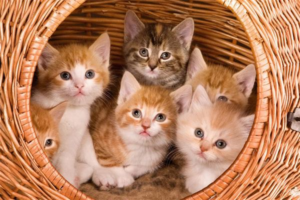
Postpartum depression in cats has many causes — hormonal shifts as well as environmental and personal factors. After birth, give the mother a quiet, stable environment with enough rest and affection to prevent it. If symptoms appear, get veterinary help promptly so she recovers.
Do You Have to Transition When Switching Cat Food?
To be safe, always transition cat food gradually. A cat's simple diet builds gut flora matched to the old recipe; a sudden new formula can overwhelm it, causing poor digestion and stomach upset. Timid cats may also stress — refusing food, hiding, even accidents. The '7-day method' works best: 80/20 for days 1–2, 60/40 for 3–4, 40/60 for 5–6, 80% new by day 7, fully switched on day 8. Extend to 10–14 days for kittens, seniors, or sensitive stomachs. Skip the transition only if your cat has an iron stomach or the old food has run out — then add probiotics. Stop and revert at any sign of soft stool or vomiting.

Dry or Wet Cat Food: Which Is Better? (Most Owners Pick Wrong)
Neither dry nor wet food is absolutely better; it depends on the cat. A healthy adult can follow a "dry in the morning, wet in the evening" rule, meeting nutrition and water needs while avoiding spoilage. Special cases, senior cats with poor teeth, 2-3 month kittens, and cats with urinary disease, should lean toward wet food. The catch: long-term wet feeding needs extra dental care. Dry food is convenient, cheap, and helps scrape teeth but is only ~5% moisture and calorie-dense, raising dehydration and obesity risk. Wet food is 70-80% moisture, tastier, and nutrient-rich but costs more, spoils fast, and leaves more residue on teeth.

Can Cat Flu Leave Lasting Effects After Recovery?
Feline rhinotracheitis (cat flu), caused by feline herpesvirus FHV-1, cannot be cured—the virus hides for life in the trigeminal ganglion and can reactivate whenever the cat is stressed, the season changes, or immunity dips. Most cats recover and live normally, but some are left with mild, manageable effects: a sensitive nose that drips in cold or dusty air, heavier tear staining from narrowed tear ducts, or—in high-risk cases—repeated flare-ups that can progress to chronic bronchitis or pneumonia. Good care (warm stable surroundings, humidity control, stress avoidance, balanced nutrition with lysine and vitamins, and regular vaccines) keeps recurrence rare. This article explains the sequelae, why only some cats get them, and how to minimize repeat episodes.

Can Cat AIDS Be Transmitted to Humans?
Feline AIDS is caused by the feline immunodeficiency virus (FIV), which, like HIV in people, damages a cat's immune system. The reassuring answer is that cat AIDS does not spread to humans; there is no solid evidence of FIV passing between people. Still, the virus is highly contagious among cats, so protect your own cat by keeping it healthy with regular checkups, good hygiene for bowls, and avoiding contact with stray or wild cats. An infected cat carries a high viral load in its saliva and can pass FIV through bites or mutual grooming, and a mother can pass it to her kittens. Among cats, isolate any FIV-positive cat, have it neutered, and limit contact with other pets; test new cats before bringing them home and vaccinate after two months. FIV cannot be cured and is managed supportively, often with no treatment if the cat shows no symptoms beyond indoor isolation, checkups, and quality food, while symptomatic cats get targeted care such as antibiotics, steroids, antivirals, or interferon. With isolation and good care, an FIV cat can live long.