Search Results
265 results for “high-quality food”

How Long Can a Dog with Kidney Failure Live? Three Ways to Add Years
There is no single answer to how long a dog with kidney failure survives—it depends on type, stage, and treatment. Acute failure from toxins or blockage can often be reversed if treated within about 48 hours. Chronic failure in older dogs can't be cured, but mid-stage dogs commonly live 1–3 years and some over 5 with good management. Diet, medication, and daily care are what buy the time.

Can Dog Kidney Failure Be Cured? The Honest Answer
Dog kidney failure splits into two very different pictures. Acute failure—from toxins, severe infection, or a blockage—can often be reversed if treated within about 72 hours. Chronic failure, common in older dogs, is irreversible because most function is already lost before signs appear; the goal then is to slow it down and protect quality of life. Both need a veterinarian's plan, not guesswork.

Why Does a Golden Retriever’s Nose Lose Color?
A Golden Retriever's nose can fade for many reasons: too little sunlight, cold weather, aging, genetics, poor nutrition, allergy, or a past injury. Cold-season and genetic fading are normal and need no action, and senior dogs simply show natural aging. But if fading comes from lack of vitamins and minerals or from allergy, step in to prevent bigger problems. Provide sun time, a balanced high-quality diet, and see a vet if allergy is suspected.

Is Dog Neutering Risky for Infection in Summer?
Neutering a dog in summer does raise the chance of wound infection, because heat, humidity, and heavier sweat and oil let bacteria multiply faster and slow healing, while mosquitoes and fleas add irritation. With good care, though, a summer surgery can still go smoothly. Keep the incision clean and dry, use an Elizabethan collar, limit activity, provide a dry clean space, feed quality food, control parasites beforehand, and check the wound often for swelling, discharge, or odor, seeing a vet for anything abnormal. Choose a reputable clinic for the procedure.

What to Do When Your Cat Is Addicted to Flavor Enhancers
Some low-quality cat foods rely on artificial flavor enhancers to make cats overeat, creating a false impression that the food is popular. While small amounts of natural enhancers are harmless and even nutritious, artificial ones such as sodium glutamate, pyrophosphates, and meat flavorings can lead to dependence and poor nutrition. If your cat is already hooked, switch gradually to a high-quality natural diet using a slow transition plan, mixing old and new food over roughly two to three weeks. Add nutritious toppers like wet food or supplement paste, and always choose reputable brands so your cat gets balanced nutrition instead of empty calories.

Asian Arowana
The Asian Arowana is a primitive, endangered species known as a 'living fossil' and called 'Dragon Spitting Pearl' in Hong Kong. Resembling the legendary dragon, it is one of the most popular and expensive ornamental fish, distributed across Southeast Asia.

Thompson’s Surgeonfish
Juvenile Thompson's Surgeonfish are blue-gray, and adults develop a white tail, but in both stages the species' most distinctive feature is a black spot on the back near the rear of the dorsal fin. Captive care requires a tank of at least 450 liters to give this active swimmer enough room.

Whitefin Surgeonfish
The whitefin surgeonfish (Acanthurus albipectoralis) is a Great Barrier Reef tang that grows to ~33 cm and is uniformly black with a white rear-half pectoral fin. A marine (saltwater) species, it is aggressive to its own kind but peaceful with others, and needs a large reef tank with stable, high-quality water and both meaty and algal foods.

White-lipped Mud Turtle
A strikingly pretty mud-turtle relative - the 'mango-head' morph can flush yellow onto limbs and shell. Friendly and mid-priced, but it cannot brumate and must be kept heated year-round.
Mexican Giant Musk Turtle
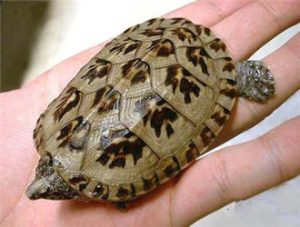
The Mexican Giant Musk Turtle (Staurotypus triporcatus), also called the giant musk or 'Mexican giant egg' turtle, is a highly interactive, intelligent turtle that adapts well to captivity. Not hard to keep, but it is large, aggressive, and relatively expensive.