Search Results
4 results for “heterochromia”
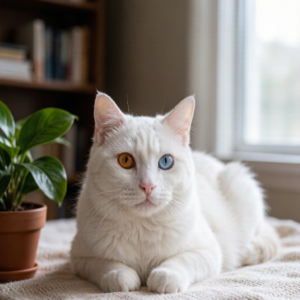
Does Heterochromia Affect a Cat’s Vision?
Heterochromia, or odd-eyed cats, does not affect vision, and these cats are usually striking. But most have a hearing defect: the ear on the blue-eyed side often has impaired hearing, a beautiful flaw. Because cats rely on hearing to move around, this can affect their actions. Owners should understand if an odd-eyed cat ignores them because it cannot hear, and should fit guards and supervise them. Their eyesight is normal; only their hearing differs, and it does not harm general health. Adopt with commitment, and never abandon them for it.

What Colors Can Dog Eyes Be?
Dog eye colors vary widely: brown, black, and blue are most common, while green and gold are rarer, and some dogs show heterochromia, or two different-colored eyes. Color is genetic, but age, health, and environment can change it over time. Puppies are born with light eyes that darken with age. Whatever the shade, each pair is unique, so watch and care for your dog's eyes, cleaning them regularly and seeing a vet at the first sign of trouble.
The Secret Behind Cats With Two Different Eye Colors
Odd-eyed cats - sometimes called "strange eyes" - have two differently colored irises and usually turn up in white cats; among purebreds, matching eye color is the norm, so odd eyes are typically from mixing. The condition, heterochromia iridis, is not a disease. Japan once called gold-and-blue eyed cats a symbol of luck, and Thailand's native Siamese region named the look "diamond eyes." The cause is the dominant white (W) gene, which suppresses pigment cells; without them the iris looks blue, and the same missing cells also fail to form the ear's sound sensors, which is why many white blue-eyed cats have hearing loss. About 60-80 percent of white blue-eyed cats have some deafness, and a blue-eyed side in an odd-eyed cat carries a 30-40 percent chance of deafness on that ear.
Why Do Cats Have Different Eye Colors?
Cat eyes come in an astonishing range of colors - copper, amber, green, blue, orange and brown - and certain breeds are famous for theirs: Ragdolls and Siamese for brilliant blue, while the common domestic shorthair most often shows yellow. But a kitten's eye color is not set at birth. Newborn kittens usually have blue eyes because melanin has not yet activated, and the true color only emerges as they grow. In this article we explain what determines a cat's eye color, at what age it settles, why some cats show a mesmerizing deep blue, and the fascinating genetics behind odd-eyed cats with two different colored eyes.