Search Results
137 results for “forage”
What do wild grass turtles eat?
In their natural environment, wild grass turtles mainly eat small fish, shrimp, loaches, tadpoles, snails, worms, mollusks, and shellfish, and they also consume algae, moss, and plant roots and stems. Grass turtles often forage near water sources, feeding in lakes and rivers. Their food choices are flexible and they can adapt to different plants depending on the environment and season. Thus wild grass turtles have a diverse diet, which is one of the keys to their survival and reproduction.
What do butterflies generally eat?
Diet changes by stage: as larvae they eat vegetables, leaves and fruit-tree buds; as adults they mainly drink nectar, favoring different flowers by species. They also feed on fruit, sap and rotting fruit; most eat liquids via their proboscis. Diet depends on growth stage, environment and season.
What does a pearl gourami eat?
In nature, pearl gouramis eat small invertebrates like mollusks, shrimp, and crabs, plus other fish eggs and fry, plankton, and algae. In culture, use prepared food as staple, plus small live prey rich in protein like water fleas, threadworms, and bloodworms. You can also plant algae and aquatic plants in the tank for them to graze.
What should a nursing rabbit eat?
A nursing doe needs more green, juicy feed to aid milk production while supplementing nutrition, plus some concentrated feed and quality legume forage like soybean cake, bran, and soy pulp. Ensure ample water and watch milk output and the kits' intake; if milk is insufficient, supplement the underfed kits with goat milk formula.
What do white-eye birds eat?
White-eye birds are omnivorous, feeding mainly on insects, fruits, seeds and nectar, and also eating small reptiles and amphibians. In the wild they forage in grasslands, farmland and woods, briefly perching before darting out to catch food. They particularly enjoy insect foods such as aphids, moths, dragonflies and locusts.
What does an emu mainly eat?
The emu is herbivorous, mainly eating grass and fruit plus some insects and larvae. Its strong claws dig out roots, seeds, and ant nests, and its sharp beak strips leaves. Its diet fits its habitat, and it migrates for food by season.
My hamster escaped for a day; I caught it the next day and put it back, then it ran on the wheel and scratched the cage edge, and its cagemate also escaped and is not caught yet — what should I do?
With one hamster still loose, close doors and windows and search the home, focusing on dark corners since hamsters avoid bright light. Hide food so hunger draws it out, or lure it with food like sunflower seeds dropped on the floor. Catch it promptly to avoid danger.
What does a peacock eat?
Peacocks eat greens—corn, wheat, sorghum, soybean, soybean cake, grasses—plus mushrooms, tender grass, leaves, termites, wild fruit, grass seeds. In captivity feed grass/tree seeds, rice, seedlings as staple with animal foods (locusts, crickets, caterpillars).

What Does Arowana Drop-Eye Mean?
Drop-eye is a normal physiological phenomenon in arowana, common in fish kept in aquariums, and silver arowana are even more prone to it. Drop-eye does not affect health but seriously impacts appearance and reduces ornamental value. Keepers should take preventive measures. Our veterinarian mainly introduces the causes of arowana drop-eye to help with prevention.
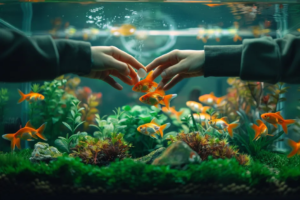
Common Causes of Arowana Drop-Eye
Causes of arowana drop-eye can be divided into congenital causes, in-tank factors, and out-of-tank factors. However, drop-eye is a normal physiological phenomenon during growth, not a sign of disease. Our veterinarian helps you understand the causes in detail.