Search Results
137 results for “forage”

What to Do When a Rabbit Gets Hyper at Night
A rabbit that turns energetic at night can have many reasons: too little daytime activity, changes in the evening environment, or physical discomfort. To burn off energy, give it enough stimulation during the day. Also check diet and health regularly to rule out digestion trouble or pain, and offer a cozy hiding spot like a box to help it relax and sleep. If night excitement persists, too much noise or light may be the cause, so place the cage in a quieter area with fewer stimuli.

What to Do When Your Cat or Dog Has Chronic Constipation, Diarrhea, or Indigestion
About 60 to 80 percent of a cat or dog's immune system resides in the digestive tract, and a healthy gut is the body's first line of defense against pathogens and toxins. When the intestinal flora falls out of balance, pets frequently develop constipation, diarrhea, and poor digestion and become far more prone to illness. Diet, stress, medications, and a naturally smaller microbiome all influence gut health. Probiotics can help restore balance, but most beneficial bacteria are destroyed by stomach acid or by heat during food processing. This guide explains why gut balance matters, what disrupts it, and how to choose a heat- and acid-resistant, high-activity probiotic that actually survives to reach the intestines where it is needed.
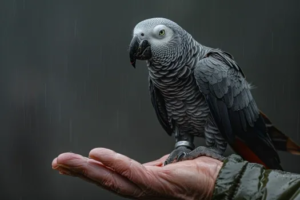
Pacific Parrot: Traits and Care
The Pacific parrot (or Pacific parakeet) is among the smallest parrots, only about 12 cm long and 30 g, earning the nickname "pocket parrot." Mostly green or blue, it is gentle, cute, and not very destructive, and can even learn a few words. In the wild it flocks and eats seeds, berries, and fruit; in captivity it needs a small cage, mixed seed or pelleted food, baths, and sunlight. Breeding runs January to May with four to six eggs.

Kohaku
The Kohaku is the representative variety of koi, beloved by many hobbyists, and is increasingly kept as a feng shui fish. It was first discovered between 1804 and 1829, and was gradually developed into its present form through selective breeding.

Tancho Kohaku Koi
The Tancho Kohaku Koi is a white koi with a single red spot on the top of the head, earning the feng shui name 'good fortune ahead.' A temperate fish, it is hardy but sensitive to temperature swings over 4°C. Popular as a feng shui fish for career luck.
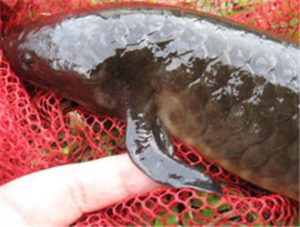
Australian Lungfish
The Australian lungfish (Neoceratodus forsteri), also called the Queensland lungfish, is the largest of the living lungfishes and a true 'living fossil' that breathes with both gills and a lung. Native to the rivers of Queensland, Australia, it is a protected species and not part of the ornamental aquarium trade.
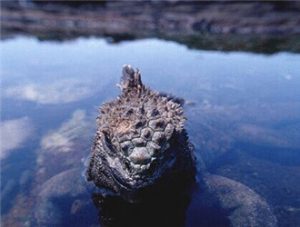
Marine Iguana
The only lizard that forages in the sea - Galapagos endemic, black and salt-crusted, drinking seawater and eating marine algae. A cold-water specialist, not a typical pet.
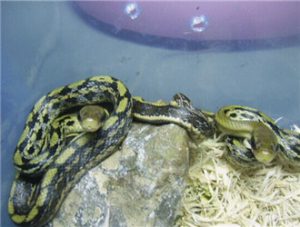
Chinese Beauty Snake
A large, non-venomous rat snake of southern China - the 'black-browed' beauty with four dark side bands. Hardy and a legendary rat-catcher, but fierce when startled.

Indo-Chinese Rat Snake (Grey Rat Snake)
A wide-ranging, fast, non-venomous rat snake - the 'over-tree dragon' snake of southern China. Docile and a good pet, it may drop its tail when grabbed.

Salamander
Salamanders are tailed amphibians (order Caudata) - smooth-skinned, moisture-dependent relatives of newts. The Chinese fire-bellied newt is the most commonly kept East Asian species.