Search Results
101 results for “feeding tube”

Takydromus wolteri
The mountain grass lizard (Takydromus wolteri) is a grass lizard very widely distributed across northern China. A small, slender, burrowing lizard, it is kept by both researchers and hobbyists and does well on a sand substrate with 12-14 hours of daylight.

Dyscophus antongili
The Antongil Bay Tomato Frog (Dyscophus antongili) is native to the east coast of Madagascar and feeds on insects. Restricted to a narrow range and threatened by habitat loss and poaching for the pet trade, it is listed under CITES Appendix I. Wild individuals come in red (females) or yellow (males), so choose a female if you want a red 'tomato'.

Tomato Frog
The tomato frog (Dyscophus guineti) is a brilliantly red, frog-shaped amphibian from Madagascar's eastern coast. Despite its looks, its skin secretes a painful defensive toxin, and it thrives in a humid, mostly terrestrial setup fed on crickets and other insects.
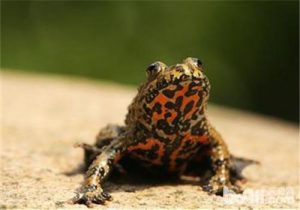
Oriental Fire-bellied Toad
The Oriental fire-bellied toad (Bombina orientalis) is a small (about 45 mm), rough-skinned toad from northeastern China, Korea, and Russia, famous for its bright orange-and-black underside displayed in a defensive 'unken' arch. Listed under China's protected-wildlife directory, it is best left in the wild.

East African Black Mud Turtle
The East African Black Mud Turtle is scarce in the wild and thus rarely kept in captivity; in China it is uncommon, though other side-neck species are seen more often, indicating its rarity and need for protection. It eats both plants and animals, living in shallow water and occasionally climbing onto land.
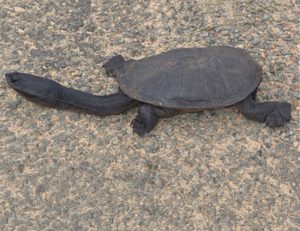
Narrow-breasted Snake-necked Turtle
The Narrow-breasted Snake-necked Turtle inhabits small coastal rivers, wetlands, or swamps, is strongly aquatic, and can bury into bottom mud. It is fully aquatic, even hibernating and mating in water, with females coming ashore only to lay eggs.

Pyxis planicauda (Malagasy Flat-tailed Tortoise)
The flat-tailed tortoise is found along the west coast of Madagascar, closely resembling the spider tortoise but recognized as a distinct species. It is a shy, mostly herbivorous tortoise that aestivates through the dry season.
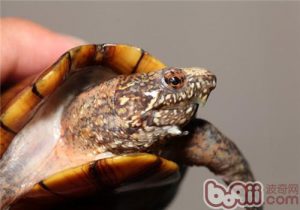
Kinosternon acutum (Tabasco Mud Turtle)
The Tabasco mud turtle (Kinosternon acutum) is a medium-sized mud turtle prized for its vivid head striping, found mainly in the Mexican Caribbean lowlands. It is rarer than the narrow-bridged musk turtle and seldom seen on the market.
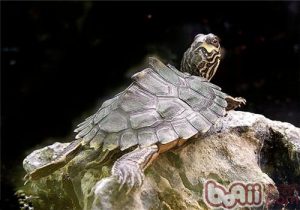
Graptemys pulchra (Alabama Map Turtle)
The Alabama map turtle resembles the red-eared slider in habits, with head striping and a protruding keel. Named for its map-like yellow markings, it feeds mainly on aquatic clams and snails, crushing shells with its hard jaws.

Pseudemydura umbrina (Western Swamp Turtle)
The Western swamp turtle (Pseudemydura umbrina) is one of Australia's smallest turtles; males have a 155 mm shell and weigh 550 g, while females reach 135 mm and 410 g. Its coloration varies with age and habitat, and it is listed as Critically Endangered.