Search Results
623 results for “feeding guide”

Cymric
The Cymric, English name Cymric, is also called the Longhaired Manx or Longhaired Isle of Man cat. From its alias we know it is a longhaired cat; though long-haired, it's not hard to groom. Its most striking feature is having no tail, drawing immediate attention.

Siberian
The Siberian Forest Cat, shortened to Siberian Cat, has the earliest written records from the 11th century: it was a very common cat in Russian markets and Siberian villages. Living in a harsh country, it is covered in long fur with a thick ruff around the neck. Its outer guard hairs are hard, smooth, and oily, and its dense undercoat resists the Siberian cold.
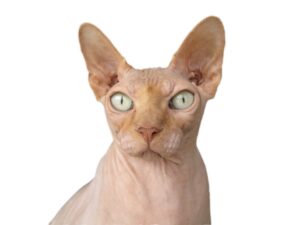
Sphynx
Sphynx (details)

Chinchilla
The Chinchilla, with the English name Chinchilla, originates from Britain and descends from the Angora and the Persian. Some call it the artificial cat, hinting it was deliberately bred by humans. Notably, the Chinchilla was the first fully human-bred cat, appearing in 1894.

Russian Blue
The Russian Blue, also called Russian Blue, Archangel Blue, or Maltese cat, with English name Russian Blue, is known as the 'aristocrat of shorthairs' and 'elf of winter.' Originating in the 19th century, once only in Russia, now worldwide. Few in number globally; buying one costs at least tens of thousands. Cheap ones are hybrids.

Selkirk Rex
The Selkirk Rex, English name Selkirk Rex, is one of the newest natural breeds, evolved from domestic cats. First from Wyoming, USA, cross-bred with Persians to develop its traits, it can be crossed with Persians, Exotic Shorthairs, British and American Shorthairs. Free of genetic diseases, it is a very healthy cat distinguished by its fully curly coat—even the whiskers curl.

Chartreux
The Chartreux, also called the Chartreux Blue Cat, has the English name Chartreux. Native to France, its history dates to the 14th century. Together with the British Shorthair Blue and the Russian Blue, it is one of the world's three great blue cats. The Chartreux has a long history, recorded in publications as early as 1558.

Oriental Shorthair
The Oriental Shorthair is a distinct breed, unexpectedly produced by breeders while developing another cat. They wanted a pure-white Siamese, so crossed Siamese with pure-white cats, producing today's Oriental. Though born in 1962, it was recognized as a new breed in 1972. Its appearance is close to the Siamese but differs greatly in coat color.

Canadian Hairless
The Canadian Hairless, also called the Sphynx, is an extremely rare hairless genetic variant that appeared during the breeding of American or European domestic cats. Although it shares the skin pigment of domestic cats, its skin bears only a few hairs. With a wedge-shaped body, large ears, and a bulky frame, its head looks like Yoda's. The whole look makes it seem not cute but rather frightening compared with domestic cats.

Havana
Havana (details)