Search Results
35 results for “feather plucking”
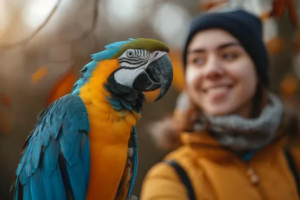
What to Do When Your Parrot Shows Breeding Behavior
Breeding behavior in parrots is natural but can turn noisy and aggressive. You can calm it by avoiding sensitive-area petting, trimming rich foods, removing nest materials, and giving daily out-of-cage time and baths.

Signs of Parrot Depression
Depressed parrots show dropping appetite, new aggression, feather-plucking (which can become a destructive habit), and changed vocalizations. Since they need companionship, spend time with them and provide toys or a companion bird to prevent it.

Why Do Parrots Get Depression?
Parrot depression shows as feather-plucking and irritability, harming the bird and risking head-banging. Common causes are boredom, anxiety, hormonal or environmental change, and mineral deficiency - all preventable with company, enrichment, and balanced diet.

Why Parrots Are a Poor Fit for Full-Time Workers
Parrots need companionship and enrichment; long alone hours in a small, monotonous cage lead to stress, depression, and feather-plucking. Full-time workers who cannot meet these needs should think twice, or keep a pair and enrich the environment.

Grey-headed Lovebird
The Grey-headed Lovebird (Agapornis canus) is loved for its largely green plumage, its lifelong pair bonds, and its quiet nature compared with many other parrots. Native to Madagascar, it is a small, gentle, and shy companion bird.
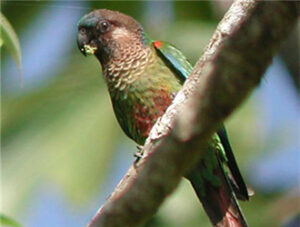
Painted Conure
The Painted Conure (Pyrrhura picta) has 9 subspecies and lives in forests and forest edges of Venezuela, Brazil, and neighboring countries, mostly around 600 m elevation. A small, attractive conure, it is a decent pet but sensitive to temperature changes and needs a clean environment and a varied, nutritious diet.

Golden Conure / Queen of Bavaria’s Conure
The Golden Conure has very special plumage: except for green wings, its entire body is golden yellow, dazzling and beautiful. It is one of the rarest, most beautiful, and largest of the conures.
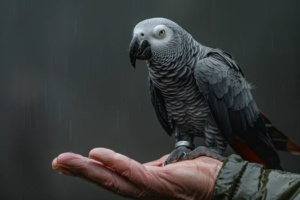
How to Tell If a Parrot Likes You
Parrots show affection subtly - calling when they see you, letting you touch them, lowering their head, flying to you, or gently mouthing your hand all signal trust. Bonding grows from meeting their needs, providing security, regular interaction, and toys.

Why Is Your Budgerigar Lethargic and Sleeping All the Time?
A budgie that is low on energy and sleeps constantly may be reacting to the weather, or it may be lacking attention or falling ill. Watch its eating and overall condition closely; if you spot abnormal symptoms, treat promptly to keep the problem from worsening.
What is the parrot’s temperament like?
Parrots are emotional, irritable, and unpredictable; most are individualistic and resist approach when moody, sometimes screaming or biting. But they are very clingy flock birds; long neglect brings depression and feather-plucking.
- « Previous
- 1
- 2
- 3
- 4
- Next »