Search Results
16 results for “eye glow”
Why Do Cats’ Eyes Glow in the Dark?
The ancient Egyptians believed cats trapped the setting sun's light in their eyes until morning; the Greeks thought a flame flickered inside. The real reason is a layer called the tapetum lucidum behind the retina. It reflects light back through the retina, giving the light-sensitive cells a second chance to catch it, which is why cats see far better than us in dim light. The glow is usually green or yellow, and many other animals share this trick.

Fish Eye Agate
Fish eye agate is a variety of goldfish with a silvery-white body that shimmers as it swims. It is named for its eyes, one half red and glowing, the other white like agate.
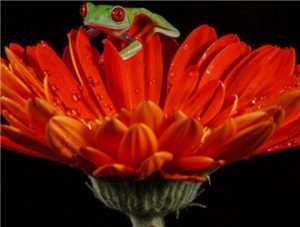
Red-eyed Tree Frog
The iconic big-eyed, green-and-orange hylid of Central American rainforests - fully nocturnal and a live-food specialist. An amphibian, not a reptile.
How to tell if this is cat ringworm?
Atypical ringworm is hard to judge by eye; use a Wood's lamp (Microsporum glows green). Some types need a skin scraping at a vet. Treat with collar, shave, antifungals, and vitamin B.
Why Cats Bury Their Head When Sleeping
The head-buried sleep pose is the most common—not repentance or heartbreak, just light. Cats like to doze near their humans, who need light awake; so the cat tucks its face in to sleep. It won't suffocate (you survive a covered head too, though mild oxygen drop can cause bad dreams). Other ideas—that the nose is a thermostat needing paw-warming, or that it's for security—lack evidence. Given a cat's glowing eyes, the simplest reason is the room is too bright.
Cat Skin Redness and Hair Loss: Fungal or Bacterial?
A cat's skin normally carries small amounts of bacteria and fungi that only cause trouble when the skin barrier breaks. Fungal infection, usually Microsporum canis, shows as ring-shaped hair loss with a red raised edge and dry scales, and spreads slowly. Bacterial infection is usually secondary—after a scratch, bite, mite, or allergy—and appears as pustules and fast-growing ulcers. Telling them apart guides the right treatment.

Paucis Dwarf Cichlid
The Paucis dwarf cichlid was earlier called the blue lyretail dwarf cichlid, later renamed from a foreign translation. Males show a bright pale-blue metallic sheen, very pretty, but both keeping and breeding are very hard.

Firemouth Cichlid
The Firemouth Cichlid's greatest feature is that sexing is very difficult, yet it is a distinctive variety. Native to Mexico in North America, it is large, reaching 10–15 cm as an adult.
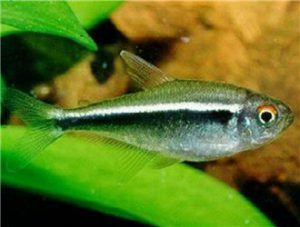
Black Neon Tetra
The Black Neon Tetra, also known as the Black Tetra or Black Neon, is native to Brazil and belongs to the tetra group, because its appearance and habits are very similar to other tetras—small and exquisite, looking beautiful in the aquarium. It has a gentle temperament but is territorial, and can be kept with other peaceful fish or shrimp.

Congo Tetra
The Congo Tetra, also called the Congo Neon, is native to Africa's Congo River. Small at 8-10 cm, it is gregarious and can be schooled or mixed with similarly sized fish.