Search Results
210 results for “dog neck skin”
How Often Should You Bathe Your Dog in Summer?
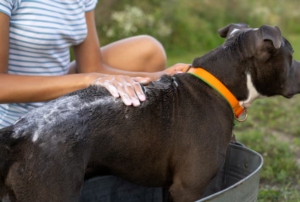
Bathing your dog once a week is usually too often. A dog's skin relies on its sebum layer to stay moist and protected; over-bathing strips it, causing dryness, worse odor, and skin infections. Frequency should follow coat type and lifestyle—indoor small dogs may need only every two to three weeks, while active outdoor dogs can go weekly. Between baths, wipes, toothbrushing, and ear care keep odor down.

Why Does Your Dog Bite Your Pant Legs? (And What It Means)
When a dog grabs and tugs at your pant leg, it is rarely out of spite. Most often the dog is trying to get your attention, invite you to play, or signal a need such as an empty food bowl. The swaying fabric can also trigger an inherited prey drive, since a moving pant leg looks like something to chase. In some cases—especially when you pick up keys or put on shoes—it signals separation anxiety: studies show a large share of dogs chew scent-bearing items to soothe themselves when they sense you are leaving. The fix is consistency: ignore the behavior, reward calm following, offer chew toys, and meet the dog's exercise needs. Understanding the motive behind the bite is the first step to changing it, and learning your dog's other body-language cues helps you bond.

Why Dogs Get Diarrhea and What to Do
Most dog diarrhea comes from feeding mistakes, not a fragile gut. Overfeeding (dogs eat to bursting - feed set amounts, about 80% full), eating too fast (use a slow bowl; short-necked breeds that cough should be checked), post-meal running (walk gently after 30 minutes), and irregular meals (split into 2-3 feeds) all trigger it. Food issues: the wrong main kibble, a gut that prefers meat, or lacking fiber from a little veg. Stress - bad food transitions, frights, new places, vet visits - also causes it; switch gradually to a similar formula. What to feed: probiotics for transition/stress diarrhea, digestion tablets for overeating, B vitamins for gut health. Stop hard-to-digest food, fast one day if severe (keep water), and never soy or corn. Black stool = upper bleed, red = lower bleed, rice-like particles = worms - bring a sample to the vet.

Why Dogs Get Puffed-Up Fur (Raised Hackles)
When a dog is angry, scared, or thrilled, the fur along its back may stand up—a reaction called piloerection, or 'raised hackles.' The fur around the neck is special: it has a strong self-restoring ability, so even after a long episode, it returns to normal once the dog calms; other body areas lack this. Some breeds show it more, some less, and the extent varies—neck only, neck-to-rump, or tail. A special muscle attached to the follicles pumps air between hairs to create the effect, and it is involuntary, part of instinct. The purpose is to look bigger, like cats, porcupines, and pufferfish. You can even read a dog's mindset from the pattern: a narrow band from neck to tail means confidence (and a higher chance of initiating attack); three-quarters of the neck raised means insecurity; neck and tail raised but the middle calm means confusion—the best moment to build trust.

What to Do If Your Dog or Cat Has Tapeworms
Many species of tapeworms parasitize dogs and cats, and the adult worms seriously harm their health, while the larval stages often use livestock or humans as intermediate hosts, threatening both animals and people. Common species include Dipylidium caninum, Taenia spp., Echinococcus granulosus, Mesocestoides, Spirometra mansoni, and Diphyllobothrium. Infection causes intestinal inflammation, malnutrition, and in severe cases intestinal blockage, with signs like vomiting, diarrhea, weight loss, and odd behavior. Diagnosis relies on clinical signs plus fecal egg exams. Prevention means regular deworming, not feeding raw offal, and controlling fleas. Treatment uses praziquantel (5 mg/kg dogs, 2 mg/kg cats), arecoline hydrobromide, bunamidine, or fenbendazole under veterinary guidance. Because some tapeworms (like Echinococcus) also endanger human health, prompt and correct control matters.
Treating a Dog’s Vomiting from Heatstroke
For a dog vomiting from heatstroke, move it to a cool, airy spot and lower its temperature with cool (not ice-cold) water or alcohol wipes—too-cold water traps heat by clamping vessels. Keep the neck extended to ease breathing, give oral saline, and stop cooling once normal temperature returns. Clear vomit from the mouth and keep the head low to prevent aspiration pneumonia.

Should You Microchip Your Dog?
Microchipping a dog is well worth it. A lost dog can be scanned to reveal its owner's contact and address, greatly raising the chance of a safe return, and in some areas a chip is required for the pet license. The chip is rice-sized, injected quickly under the skin of the neck with no anaesthesia, causes only a brief pinch, and stays put far more reliably than a collar tag. It also stores vaccine and health records, helping both reunion and city-wide pet management.

Red-headed Side-necked Turtle
The red-headed side-necked turtle (Platemys platycephala) is a flat-headed South American side-neck from the Amazon and Orinoco basins, with a dark orange-red head. Shy and cold-sensitive, it is best kept much like a box turtle.

Sebaceous Adenomas in Dogs and Cats
Sebaceous adenomas are usually benign, curable skin tumors of older dogs and cats, most often on the back, sides, limbs, and head or neck. They appear as firm, movable, hairless lumps that may ulcerate. Complete removal or freezing cures the benign forms.

Sertoli Cell Tumors in Dogs and Cats
Sertoli cell tumors are hormone-producing testicular tumors of older male dogs and cats that cause feminization through excess estrogen. Signs include symmetrical hair loss, enlarged breasts, and a lengthened prepuce. Surgical removal of both testicles resolves most signs within a few months.