Search Results
99 results for “dental care”

What to Do If Your Dog Gets Accidentally Pregnant
A dog's accidental pregnancy is best allowed to go to term, since many vets decline abortion on humane grounds, every fetus being a life. Termination, whether by medication or surgery, carries real risks and harms the dog. If you do not want puppies and will not spay, keep the dog contained, especially during heat, to avoid the risk of a termination procedure. This article covers how termination is done and why prevention is the safer path.

How to Care for a Netherland Dwarf Rabbit
Netherland Dwarf rabbits are active and need both proper housing and a sensible diet to stay healthy. Provide a cage of roughly 80×60×70 cm with soft bedding, safe toys, and chew sticks, and keep the environment at a stable temperature with low humidity, gentle light, and minimal noise. Feed mainly fresh hay (timothy, mixed, or alfalfa) for dental and digestive health, supplement with quality pellets, a little fruit and vegetables, and constant clean water—but control portions, since these rabbits gain weight easily. Build trust slowly through hand-feeding and gentle handling, and check coat, skin, eyes, ears, and teeth regularly.

The Dangers of Dental Tartar in Dogs
Dog tartar is hard buildup of bacteria and food debris along the gumline. Left alone it drives gingivitis, bad breath, loose or lost teeth, mouth infection, periodontal disease, respiratory infection, and even whole-body issues like heart, kidney, and diabetes risk. Prevention means regular brushing, dry food over wet, and limiting sugar and starch. Severe cases need a professional dental cleaning, and badly loose teeth may require extraction.

Bichon Frise: Health and Care Considerations Before You Adopt
The Bichon Frise is a gentle, low-shedding companion dog, but prospective owners should know its common care needs: pronounced tear staining from shallow tear ducts, a coat that mats and pulls the skin, separation anxiety, a sensitive stomach, and dental issues. Meeting these needs keeps the dog healthy.

Dental Calculus (Tartar) in Dogs and Cats: Symptoms, Treatment, and Prevention
Dental calculus is hardened mineral buildup on the teeth of dogs and cats that inflames the gums and causes bad breath. It is removed by professional scaling and prevented with regular dental care.
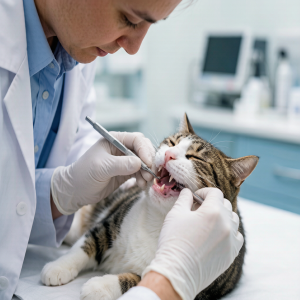
Common Feline Oral Diseases and Care
The mouth is vital for cats - for food, water, and defense. Oral disease makes survival hard.

When Does a Dog Need Dental Surgery?
Dental surgery is a treatment or preventive measure for dental disease, mainly cleaning and polishing the dog's teeth. Note that no oral problem stays the same; on the contrary, the condition will continue to develop, making treatment more difficult, which also means a longer, more complex, and more expensive treatment process. In other words, when you need to properly treat your pet's dental disease, the earlier the better.

Start with Dental Health to Keep Your Dog in Top Shape
Healthy teeth are a dog's first line of defense against mouth disease. Brush regularly with dog-safe toothpaste, and use chews, raw carrots, and dry kibble to scrub plaque between brushings.

Dry or Wet Cat Food: Which Is Better? (Most Owners Pick Wrong)
Neither dry nor wet food is absolutely better; it depends on the cat. A healthy adult can follow a "dry in the morning, wet in the evening" rule, meeting nutrition and water needs while avoiding spoilage. Special cases, senior cats with poor teeth, 2-3 month kittens, and cats with urinary disease, should lean toward wet food. The catch: long-term wet feeding needs extra dental care. Dry food is convenient, cheap, and helps scrape teeth but is only ~5% moisture and calorie-dense, raising dehydration and obesity risk. Wet food is 70-80% moisture, tastier, and nutrient-rich but costs more, spoils fast, and leaves more residue on teeth.

Why Your Cat Has a Pimple or Abscess on the Chin
A lump or pus-filled bump on a cat's chin can come from parasites, bacterial infection, heat, folliculitis, a salivary-gland cyst, or an insect sting or small wound. Figuring out the exact cause guides the right treatment. Bacterial bumps are usually drained and then cleaned and disinfected, while parasitic and bacterial causes are best prevented with regular deworming and good dental care. Keeping your cat's diet light and its mouth clean lowers the risk. See a veterinarian if the swelling is large, soft, or shows signs of a cyst or allergic reaction.