Search Results
15 results for “cat paw pad shape”

A Guide to Your Cat’s Paws
A responsible cat owner should know not only their cat's daily habits but also its anatomy. Here we explain what cat paws look like, the colors and shapes of the paw pads, and why they matter.

Why Do Cats Knock Things Off Tables?
Many cat owners suffer this 'mischief' — anything left on a table gets swept to the floor. This article explores why cats love knocking objects off tables and what it means.

Can You Really Tell a Cat’s Personality from Its Paws?
Paw-pad shapes are loosely linked to temperament—heart-shaped pads hint at an affectionate cat, Fuji-type at aloof or shy, rice-grain at gentle, and triangular at feisty—but it is not reliable. Real personality is shaped by mother, owner, siblings, and environment.
What are a cat’s paws like?
A cat's paw is round with much fur and small pads in heart, groove, round or pointed shapes. Front paws have 5 toes, back paws 4; kitten pads are pink and darken with age and friction.
What are the physical features of cats?
Most cats have a round head, round eyes, small nose and mouth — very cute. Ears stand up, but folded-ear cats' ears fold down and carry a congenital bone disease, so they're not recommended. Cats have many long whiskers that measure width and sense wind, aiding hunting. They have four legs and a long tail with paw pads like mangosteen; tail posture shows mood.

Cat Litters to Avoid
Avoid plant litters with formaldehyde-tainted binders, heavily scented litters that overwhelm a cat's sensitive nose, and crystal litter that cannot clump and can hurt paws or block the gut if eaten. Pick low-dust, natural, clumping litter your cat will actually use.
Cat ‘Garlic-Clove’ Coat vs. Dirty Fur: How to Tell Them Apart
A 'garlic-clove coat' is a cat-lover's term for fur that parts into neat, clove-like segments — a sign of dense, healthy undercoat on a slightly plump cat, borrowed from the fur industry's 'garlic-clove fur.' It feels smooth and springs apart with a light rub, usually along the neck, back, and sides. Genuinely dirty or oily fur, by contrast, clumps in greasy, sticky strands near the paws, belly, or tail tip. A garlic-clove coat signals good nutrition (but possibly excess weight), while real dirt needs a bath. Keep the coat lush with high-protein food, B vitamins, fish oil, and regular brushing.
How to tell if a Corgi is purebred
Purebred Corgis have large ears that stand by 3-4 months, a broad flat head, wide muzzle, dark almond eyes, strong short legs, thick round tail, and a high tail set; check the parents' pedigree certificates.
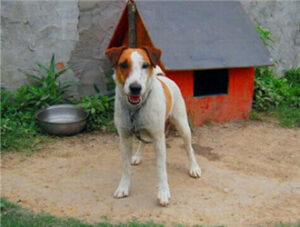
smooth fox terrier
The Smooth Fox Terrier, from 19th-century England, was bred white to avoid being mistaken for fox prey. Lively, alert, and affectionate with children, it makes a fine companion and watchdog, though it can be jealous.

Siberian
The Siberian Forest Cat, shortened to Siberian Cat, has the earliest written records from the 11th century: it was a very common cat in Russian markets and Siberian villages. Living in a harsh country, it is covered in long fur with a thick ruff around the neck. Its outer guard hairs are hard, smooth, and oily, and its dense undercoat resists the Siberian cold.