Search Results
26 results for “cat hunting instinct”
Why Are Cats So Good at Catching Mice?
Cats have a natural gift for catching mice, and it comes down to biology, instinct, and learned skill. As natural predators, they combine sharp hearing, a flexible body, retractable claws, and excellent night vision to track prey even in the dark. Their hunting instinct—inherited from wild ancestors—gives them quick reflexes and accurate judgment. Add powerful jaws and curved claws that pin a mouse instantly, plus a deep familiarity with rodent habits, and cats become formidable hunters. Even in modern homes, where catching mice is no longer necessary, that instinct survives—shown when a cat pounces on a toy or ambushes its owner in play.
Why Are Cats Afraid of Cucumbers?
Many cat owners are puzzled by the now-familiar sight of a cat leaping away from a cucumber placed nearby. This fear usually stems from a combination of instinct, vision, smell, and learned experience. Cats are naturally alert and cautious around sudden, unexpected objects, and a long green cucumber can trigger a strong startle response—some cats even mistake it for a snake. Their highly sensitive noses may also react to the vegetable's scent. A bad past encounter can create a lasting phobia. Understanding these triggers helps owners avoid deliberately scaring their cats, since such shocks can cause real stress and even illness.
Why Does Your Cat Keep Pushing Things Off the Table?
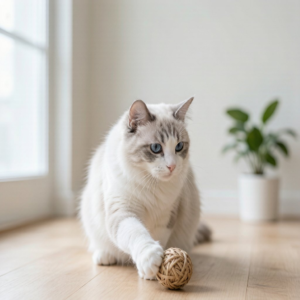
When your cat knocks your cup or pen to the floor, it isn't pure mischief. A 2019 Cornell study found domestic cats keep about 80% of their wild hunting instinct, so they treat desk objects as "motionless prey" and the push is a mock hunt, especially for round things that roll like escaping prey. Cats are also smart readers of your mood; any big reaction, scolding or a wry laugh, teaches them that pushing things earns attention, and bad attention beats being ignored. Frequent exploring is actually a mental-health sign. Curb it with a designated play zone, daily hunting games, ignoring the act, and physically securing valuables.
Why Won’t Your Cat Let You Touch Its Paws? (And How to Trim Nails)
A cat's paws are vital tools for hunting, defense, climbing, and sensing, and the hunting instinct remains even in pets, so a paw grab can feel like a threat. Paws also carry five times the nerve endings of a human fingertip and hold scent glands in the pads used to mark territory, making them extra sensitive. If a usually tolerant cat suddenly refuses paw contact, suspect pain from interdigital dermatitis, a paw injury, or arthritis, and watch for limping, obsessive licking, red swollen pads, or stiff wrists. A gradual, reward-based training plan helps most cats accept handling, but always stop if the cat shows stress.

100 Essential Tips Every New Cat Owner Should Know
Bringing home a first kitten is exciting but daunting, and poor care can hurt both of you. These 100 essentials cover diet (life-stage food, toxic grapes/chocolate/onion/garlic, no bones or raw meat, fresh water), daily care (brushing, nail and ear cleaning, litter hygiene, n+1 boxes), health (vaccines at 8–12 weeks, deworming, normal temperature 38–39.2°C, spay/neuter, no human meds), behavior (slow blinks, tail talk, no punishment), and home safety (screens, hiding wires, toxic plants, no smoke). Read them once and you'll share a calmer, healthier life with your cat.
Are Dogs or Cats Smarter?
The question of whether dogs or cats are smarter has no simple answer, because intelligence depends on how we define it. Physically, dogs have roughly twice the number of neurons as cats and a longer history of living alongside humans, which shows in their trainability. Many dogs understand over two hundred words and read human body language and emotion with ease. Cats, however, are independent problem-solvers that learn through observation, excel at hunting instincts, and can pick up simple routines like using a litter box. Rather than competing, each species displays a different kind of cleverness: dogs through social cooperation, cats through intuition and independence. In the end, both bring unique joy and companionship, so the scoreboard matters far less than the bond you share.

Why Does Your Cat Suddenly Dart Around the House?
When a cat suddenly tears around the house, pounces at empty air, or arches its back and puffs up, it is usually showing what veterinarians call Frenetic Random Activity Periods (FRAPS)—a normal behavior, especially in kittens and young cats. The triggers are mostly instinctual: a retained hunting drive, excess energy, stress, or heat in unspayed cats. Occasionally, frantic running signals a health problem such as hyperthyroidism, a neurological disorder, or a parasitic infection, particularly when paired with appetite loss, weight drop, or lethargy. Meeting the cat's exercise needs with toys and play, plus a calm, safe environment, keeps normal zoomies harmless and happy.

How to Tell If Your Cat Is Full?
Many cat owners worry their pet is still hungry and keep topping up the bowl, but overfeeding causes indigestion and obesity. To judge whether a cat has eaten enough, watch its post-meal behavior: full cats groom themselves, leave the feeding area, and settle in a sunny, comfortable spot to rest, while hungry cats linger near the food. In multi-cat homes, satisfied cats may even groom each other. Free-fed cats show weaker cues because constant access lowers food excitement. Note that two behaviors are NOT signs of hunger: guarding the food storage (common in newly arrived, unsettled cats) and showing interest in your own meal (an opportunistic scavenging instinct). Control daily portions by age, health, and appetite to keep your cat at a healthy weight.
How to Stop a Cat From Scratching and Biting
Cats scratch and bite for many reasons: seeking attention, defending resources, fear or pain, new environments, or overstimulated play. Fix it with patience, not punishment. Build trust with affection and treats, reward calm behavior, avoid scaring the cat, and give it a safe play space with enough toys. If aggression persists from fear or stress, seek help from a veterinarian or a professional trainer.
What Your Cat Is Feeling When It Acts Cute
A cat's affectionate, adorable moments are not random - each has a meaning. When a cat rolls at your feet, belly up, twisting side to side, it is often marking a warm, safe spot or scratching an itchy back (check for fleas if the itching persists). A cat's nose, with a sense of smell six to seven times keener than ours, gathers information by sniffing - at a new place, a stranger, or even your finger. A tail-up, wiggling rear before a pounce is the awake hunting instinct at play. And when a cat stares at "nothing," it is usually listening to high-pitched sounds we cannot hear; a cat that meets your gaze trusts you and may be asking for attention.