Search Results
3956 results for “cat dog”

Why Your Budgie Screams at Night and How to Stop It
Budgies are diurnal and normally settle down at night, so persistent screaming after dark usually signals stress, hunger, or a disrupted routine. Common triggers include fright, an off schedule, nighttime noise, and an unstable perch. You can quiet a noisy bird by fixing its light and quiet, offering food and water before bed, and using calm, consistent training.

Why Do Rabbits Grind Their Teeth (and How to Manage It)?
A rabbit's teeth never stop growing, so constant chewing is natural, but overgrown teeth cause pain, eating trouble, and even eye or ear infections. Provide chew toys and hard pelleted feed, and have a vet trim teeth that grow too long.

Common Misconceptions About Feeding Pets
Common feeding mistakes include giving white rice and organ meat (skin and bone problems), fish (choking and urinary stones), cooked bones (intestinal tears), human leftovers (too much salt and oil), long-term raw meat (dental and picky-eating issues), chocolate (toxic to dogs) and milk or raw egg white (diarrhea and vitamin loss). Feed a balanced, species-appropriate diet.

Can a Puppy With a Runny Nose Get Vaccinated?
Dogs showing any sign of illness—such as a runny nose, sneezing, vomiting, or diarrhea—should not be vaccinated, because live-attenuated vaccines can worsen an existing condition. Puppies need to be at least 45 days old for their first shot and about 3 months old for the rabies vaccine, with deworming spaced roughly a week apart. After vaccination, observe the dog for 30 minutes, avoid baths for 7 days, and confirm immunity with an antibody test around 15 days later.

Colorpoint Shorthair
The Colorpoint Shorthair was developed from the Siamese, with red or cream restricted to points (face, legs, ears, tail, and genitalia). Early crosses with domestic shorthairs, refined by concentrating Siamese genes with red, produced the final Colorpoint Shorthairs. Like many CFA breeds, it is a man-made breed. In the 1940s and 50s, breeders risked deciding the beautiful Siamese should come in more than traditional seal and the most common blue point.

Cymric
The Cymric, English name Cymric, is also called the Longhaired Manx or Longhaired Isle of Man cat. From its alias we know it is a longhaired cat; though long-haired, it's not hard to groom. Its most striking feature is having no tail, drawing immediate attention.
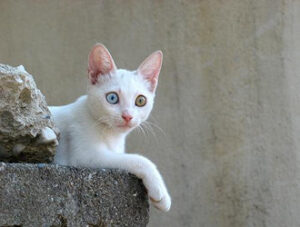
TurkishVan
Turkish Van (details)

Turkish Angora
The Turkish Angora, named for Turkey's capital Ankara, is one of the oldest long-haired breeds, dating to the 16th century. Elegant with silky, medium-length coat and almond eyes, it is agile, independent, and famously fond of water. Once nearly supplanted by the Persian, it was revived in the US from 1963 and is now carefully bred to preserve its pure bloodline.

Siberian
The Siberian Forest Cat, shortened to Siberian Cat, has the earliest written records from the 11th century: it was a very common cat in Russian markets and Siberian villages. Living in a harsh country, it is covered in long fur with a thick ruff around the neck. Its outer guard hairs are hard, smooth, and oily, and its dense undercoat resists the Siberian cold.
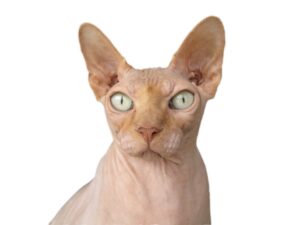
Sphynx
Sphynx (details)