Search Results
318 results for “cat care tips”

Caring for a Chinchilla After Delivery and Her Newborn Kits
A chinchilla expends a great deal of energy giving birth, so the new mother and her fragile kits need especially careful attention. Here are practical postpartum care tips to help first-time owners.

Senegal Bushbaby
The Senegal Bushbaby (Galago senegalensis), also called the Senegal galago, resembles the tarsier and the loris, especially in its typical round, protruding large eyes. About the size of a squirrel, it is arboreal and nocturnal, agile and good at jumping up to 3–5 m. Its neck is very flexible, able to turn back 180°; it has one pair of nipples on the chest and one on the abdomen.

Philippine Tarsier
The Philippine Tarsier is one of the smallest monkeys still in existence, mainly distributed in Southeast Asia, so it is generally only seen locally. Because of its scarcity, it is an endangered species now under state protection.

Silver Mosaic Chinchilla
Some Silver Mosaic Chinchillas give the illusion of being all gray, but on close look their underfur is white; most can be told apart. The Silver Mosaic Chinchilla's scientific name is South American chinchilla, and because its appearance resembles the cartoon chinchilla in Hayao Miyazaki's film 'My Neighbor Totoro,' Hong Kong people renamed it 'Silver Mosaic Chinchilla.'

Campbell’s Dwarf Hamster
The Campbell's dwarf hamster is the most short-tempered of the hamsters, and looks very similar to the three-lined (Djungarian) hamster, with little individual difference. Some Campbell's dwarf hamsters have red eyes.

Brambling
The Brambling is fairly widely distributed and is a small bird about 16 cm in length. It usually moves in flocks, pairing up only during the breeding season, and typically roosts in trees. Because it pecks crops, it causes some agricultural harm.

Salmon-crested Cockatoo
As its name suggests, the wild Salmon-crested Cockatoo is found only in Indonesia's Maluku Islands; elsewhere you will only see captive birds. Due to increasing hunting and habitat destruction, its numbers have dropped sharply, and it is now listed as a Vulnerable species.
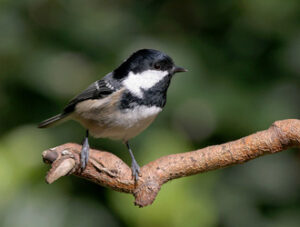
Coal Tit
Many caged Coal Tits are male birds — the reason is simple: the male's call is louder, which wins the favor of many bird lovers. Wild Coal Tits are widely distributed across Asia, Europe, and Africa. A pair signals the breeding season, while a flock means they are not currently breeding.

Eurasian Skylark
The Eurasian Skylark has about 75 species worldwide, mainly distributed in the Old World, with only the horned lark native to the New World. The skylark's beak varies greatly in form depending on the species.
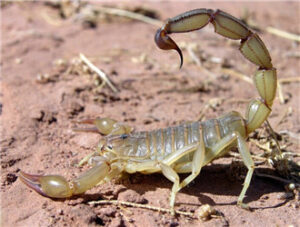
Scorpion
Scorpions have a wide range of medicinal uses, though their tails are venomous. With many species distributed across more than ten provinces in China, the most commonly used medicinal species is the East Asian scorpion (Chinese scorpion), which is highly effective in treating rheumatic conditions.