Search Results
3800 results for “Vomiting”

Do Cats Need to Fast Before and After Deworming?
Generally, cats do not need to fast before or after an internal deworming treatment—the medication can even be mixed into food. Observe your cat for 4–6 hours afterward for side effects, avoid diet changes and baths around treatment, and follow the recommended deworming frequency based on age and lifestyle.

Symptoms and Treatment of Crop Stasis in Small Parrots
Small parrots often overeat because they cannot regulate their intake, leading to crop stasis in which food ferments and rots in the crop and can be fatal if ignored. Key signs include a swollen crop, loss of appetite, lethargy, and sour-smelling drool; treatment ranges from withholding food and water and giving probiotics to clearing the crop mechanically or, for foreign-body blockage, surgery.
What Should I Do If My Cat Eats Rat Poison?
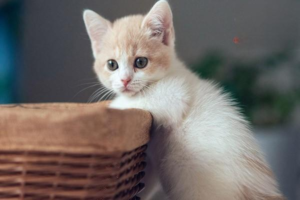
After eating rat poison, a cat may develop a fever, lethargy, loss of appetite, and vomiting, or show internal and external bleeding such as nosebleeds, bloody vomit, bloody stool, or black tarry feces. Because the toxin can severely damage the liver and other organs, seek veterinary care immediately—if none is nearby, induce vomiting at home with hydrogen peroxide, then follow up with IV fluids and bloodwork.

Can a Puppy With a Runny Nose Get Vaccinated?
Dogs showing any sign of illness—such as a runny nose, sneezing, vomiting, or diarrhea—should not be vaccinated, because live-attenuated vaccines can worsen an existing condition. Puppies need to be at least 45 days old for their first shot and about 3 months old for the rabies vaccine, with deworming spaced roughly a week apart. After vaccination, observe the dog for 30 minutes, avoid baths for 7 days, and confirm immunity with an antibody test around 15 days later.

Cymric
The Cymric, English name Cymric, is also called the Longhaired Manx or Longhaired Isle of Man cat. From its alias we know it is a longhaired cat; though long-haired, it's not hard to groom. Its most striking feature is having no tail, drawing immediate attention.
Sphynx
Sphynx (details)

Korat
The Korat cat, also called the Korat or Si-Sawat, originates from the Khorat Plateau in northwest Thailand and is an ancient breed. Introduced to the US in 1959 and recognized by American cat lovers in 1965, and by Britain 10 years later. Its coat, like the Russian Blue and Chartreux, is solid blue with no shading or pattern, with a silvery sheen, and it has a unique heart-shaped face.

Nebelung
The Nebelung is essentially a long-haired Russian Blue, a rare variant recognized by TICA in 1987 and hailed as the 'nobility of long-haired breeds.' Apart from its coat, it is identical to the Russian Blue. Quiet, shy, and gentle, yet intelligent and adaptable, it is well suited to calm households.
Devon Rex
Devon Rex (details)

Tonkinese
The Tonkinese, also known as the Vietnamese cat, is not from Vietnam but a purebred short-haired breed produced by crossing the Siamese with the Burmese, first appearing in North America in the 1930s. With pointed coloring softer than the Siamese and a short, silky coat like the Burmese, the Tonkinese is famously affectionate, active, and people-oriented.