Search Results
204 results for “Training, Daily Care”

Balinese
Balinese (details)

Siamese
The Siamese cat, also called the Thai cat, with English name Siamese, traces its origins to Thailand in the 14th century from non-purebred Asian cats. Once living in royal palaces and temples, it was later given as a diplomatic gift to other countries. Famous for its striking color points, blue almond eyes, and vocal, affectionate personality, the Siamese is a beloved and distinctive breed.

Abyssinian
The Abyssinian, also called the rabbit cat, Ethiopian cat, or Abyssinian, has the English name Abyssinian and is now distributed around the world. People usually judge a cat's origin by its name, but the Abyssinian's origin seems somewhat distant from Abyssinia. Abyssinia is the old name for Ethiopia, yet many believe the Abyssinian comes from ancient Egypt.

Egyptian Mau
The Egyptian Mau (Felinae) is found worldwide. Although called the Egyptian Mau, it cannot be confirmed that it originated in Egypt; however, because its image and written records appear in ancient Egyptian murals, steles, and papyrus scrolls, people believe its ancestor is the African wildcat. In the 1950s, the Egyptian Mau was introduced to the United States and Britain, and in 1968 it won awards in formal competitions.

Ragdoll
Ragdoll (details)

New Zealand Rabbit
The New Zealand Rabbit is a meat rabbit breed originally from the United States, now promoted worldwide. It is numerous, economically profitable, and highly adaptable to the environment. It is kept in large numbers in China's rural areas, with high meat yield and a large body.
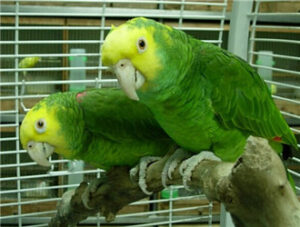
Double Yellow-headed Amazon
The Double Yellow-headed Amazon is a striking parrot with a yellow head, native to Central America and Mexico. A strong talker and affectionate pet, it is now threatened in the wild by habitat loss and trapping, with some subspecies listed as protected.

White Crested Guinea Pig
The White Crested guinea pig, also called the white-crested Dutch pig or cavy, is gentle, alert, and lively like many guinea pigs, making it a great household pet. Its defining feature is an all-white body with a crest-like swirl of hair on the head.
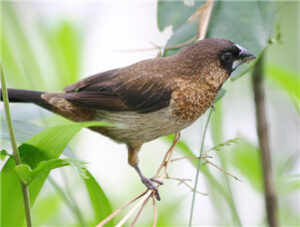
White-rumped Munia
In old times, street fortune-tellers often carried caged birds that would pick out prophecy slips, calling them 'magic sparrows' to deceive people. That 'magic sparrow' was the White-rumped Munia, a seed-eating bird that is bold and tame and easy to keep in a cage.

Jardine Parrot
The Jardine Parrot (Poicephalus gulielmi) currently has three subspecies. Its body is almost entirely green and is the second-largest parrot species after the Cape Parrot. Its distribution is scattered and not concentrated, mainly across central Africa and parts of West Africa.