Search Results
6 results for “Japanese bobtail”

Japanese Bobtail
The Japanese Bobtail, also known as the Lucky Cat (Maneki-neko), is very popular in Japan. Cat lovers, upon hearing 'lucky,' want one. It is a native Japanese breed with a history tracing back centuries. Bred in the US after introduction, it is said an American cat lover in Japan found a cat with a short rabbit-like tail and brought several back after WWII; these are the ancestors. The Japanese Bobtail sits with one front paw raised, said to represent good fortune.
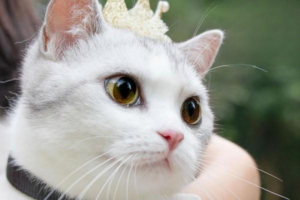
Are Bobtail Cats Born with Short Tails?
Let's talk about bobtail cats. I once thought short tails were broken or docked — so sad — but later learned they're born that way, decided by genes.
Why are some cats short-tailed?
A short tail is mainly from genetics or trauma. Breeds like Japanese Bobtail, American Bobtail, and Scottish Fold are short-tailed by mutation; trauma such as a car or bite can also shorten it.
What breed is the ‘Lucky Cat’ (Maneki-neko)?
The Lucky Cat figurine is based on the Japanese Bobtail, including calico, red-and-white, and white types, with the calico most popular. Its tail is only about 10 cm, one of the shortest, and it is smart, gentle, agile, and easy to keep.
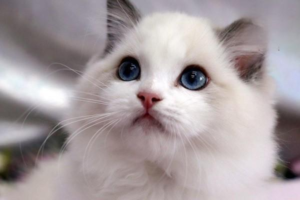
Top 10 Smartest Cat Breeds
Some cat breeds are notably more intelligent and trainable than others. From the hairless Sphynx to the elegant Persian, here are the ten smartest cats and the traits that make them so clever.

The Secret Behind Cats With Two Different Eye Colors
Odd-eyed cats - sometimes called "strange eyes" - have two differently colored irises and usually turn up in white cats; among purebreds, matching eye color is the norm, so odd eyes are typically from mixing. The condition, heterochromia iridis, is not a disease. Japan once called gold-and-blue eyed cats a symbol of luck, and Thailand's native Siamese region named the look "diamond eyes." The cause is the dominant white (W) gene, which suppresses pigment cells; without them the iris looks blue, and the same missing cells also fail to form the ear's sound sensors, which is why many white blue-eyed cats have hearing loss. About 60-80 percent of white blue-eyed cats have some deafness, and a blue-eyed side in an odd-eyed cat carries a 30-40 percent chance of deafness on that ear.