Search Results
36 results for “Chow Chow weight”
Why Can a Dog’s Tongue Stick Out So Far?
The tongue drinks, cools, and signals health. Dogs lap by curling the tongue into a scoop. Their tongue muscles are more elastic than ours, so it flops out easily. For cooling, dogs sweat only from paw pads; they pant with the tongue out, evaporating saliva to shed heat—still weak against summer, so avoid heat. Tongue color hints at health: normal is pink/red; bright red at rest suggests inflammation; a normally pink tongue that turns purple after exercise points to the heart (or heatstroke/poisoning)—see a vet.

What Causes Glaucoma in Dogs?
Canine glaucoma comes in primary and secondary forms. Primary glaucoma is a hereditary drainage-angle defect that blocks fluid outflow and raises eye pressure; it is common in Huskies, Chow Chows, Poodles, Cocker Spaniels, Beagles, and Maltese, usually appearing at 4–9 years. Secondary glaucoma follows eye disease such as uveitis, pupil blockage, lens luxation, or tumors. Treatment aims to lower pressure and save vision—medication works best early, but surgery is often needed later. Because early signs are subtle, at-risk breeds should have annual eye-pressure checks.
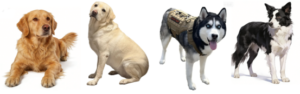
Popular Dog Breeds: Pros and Cons at a Glance
Choosing a dog means weighing temperament, exercise needs, grooming, and health risks against your lifestyle. From the gentle, trainable Golden and Lab to the stubborn, shedding Husky and Samoyed, and from compact Corgis and Pugs to tiny Bichons and Yorkies, every breed trades one challenge for another. There is no perfect dog—only the right match. Know the trade-offs before you commit.
What Causes Eyelid Entropion in Dogs?
Dog eyelid entropion comes in congenital and acquired forms. Breeds like Shar-Pei, Chow, Great Dane, miniature Poodle, Saint Bernard, and Labrador are prone to the congenital type because of facial structure and genetics. Acquired entropion follows conjunctivitis, foreign irritation, ingrown or double eyelashes, dry eye, or corneal ulcers, and shows as spasmodic muscle contraction; seniors may get it from lost tone. Most cases ease once the cause is removed, but if not, eyelid surgery is likely needed.

Is Inhalation Anesthesia Safe for Dogs?
Dogs are usually anesthetized by inhalation or injection, and inhalation anesthesia is generally the safer choice because it places less burden on the organs. It costs more, though, and its effect is shorter, so it is less suited to very long surgeries where the dog might wake and struggle. Any anesthesia carries risk because it depresses heart, lung, liver, and kidney function, so the method should match the dog's pre-operative readings and health. Dogs with metabolic or liver and kidney issues are often better with inhalation. Watch for post-anesthetic reactions like acute kidney failure, irregular heartbeat, temperature swings, and airway blockage in flat-faced breeds.
Canine and Feline Entropion: Symptoms, Treatment, and Prevention
Entropion is the inward rolling of the eyelid edge in dogs and cats, making lashes scrape the cornea and cause tearing, conjunctivitis, and ulcers. It is often surgical, especially in breeds like Shar-Pei and Chow Chow.
- « Previous
- 1
- 2
- 3
- 4