Search Results
476 results for “Cat grass”
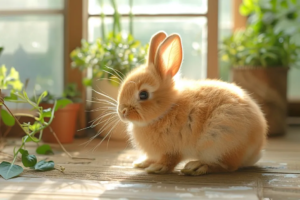
What Causes Malocclusion in Rabbits?
Malocclusion, or misaligned teeth, is a common rabbit dental disease with congenital and acquired forms; most cases are acquired from poor management. Rabbit teeth grow continuously, so they must wear them down by eating coarse fiber like grass. Without enough chewing, teeth overgrow and slip out of alignment. Overlong teeth can cut the lips, tongue, and cheeks, cause painful refusal to eat and mouth ulcers, and in severe cases the roots may pierce into the nasal cavity, eye socket, or jaw, forming abscesses. Prevent it with regular dental checks and plenty of hay for wear.

What to Do When Your Guinea Pig Has a Cold
Guinea pig colds usually come from temperature drops or cold exposure, such as big day-night swings, sudden seasonal cooling, or chills after a bath, and weak immunity raises the risk. Signs include sneezing, clear runny nose, cough or wheeze, lethargy with poor appetite, and fever above 40°C. See a vet early for diagnosis and a plan, keep the home quiet, warm, dry, and clean, and skip baths while sick. Offer mild herbal dried grasses like chamomile or mint and a little vitamin C liquid to support immunity, using any medication only per veterinary guidance.

Calico Long-tailed Comet Goldfish
The Calico Long-tailed Comet Goldfish is a variety of goldfish belonging to the comet (grass) type. It shares the habits of goldfish, but its distinctive shape and coloration are loved by aquarists.

Siamese Tiger Fish
In its native Thailand, the Siamese Tiger Fish is a food fish and a rather prized one. Thanks to its distinctive shape and striking pattern, it has become a very popular ornamental fish in recent years. Most specimens seen in the domestic aquarium market reach China via Singapore from Thailand.

Red and White Comet Goldfish
The Red and White Comet Goldfish is a type of grass-goldfish mainly distributed in China. Because the grass-goldfish resembles a koi, it is also the most ancient kind of goldfish. It is not hard to keep and is a common, easy goldfish variety.
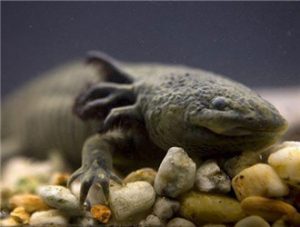
Chinese Giant Salamander
The Chinese Giant Salamander (Andrias davidianus) is one of the world's most precious amphibians, a Class II protected aquatic wildlife in China, nicknamed the 'baby fish' for its cry like an infant. Fierce and agile, in captivity it can live 50-60 years. It is carnivorous, swallowing prey whole.

Australian Spotted Arowana
The Australian spotted arowana (Scleropages leichardti) — also called the spotted barramundi or northern saratoga — is a large, nocturnal, fiercely aggressive arowana from eastern and northern Australia. A carnivorous tank boss that needs a big aquarium, soft acidic-to-neutral water, and careful, varied feeding.
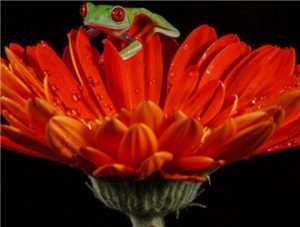
Red-eyed Tree Frog
The iconic big-eyed, green-and-orange hylid of Central American rainforests - fully nocturnal and a live-food specialist. An amphibian, not a reptile.

Radiated Tortoise
One of the most beautiful star-patterned tortoises - a Madagascan CITES I species that is common in captivity yet wild-endangered. 'The rich man's sulcata'; hardy if set up right.

Large-headed Turtle
A Chinese-endemic 'big-head' turtle that looks like a Reeves' but with a huge triangular head it cannot retract - a threatened, somewhat delicate water turtle.