Search Results
5279 results for “Can f 5”
Double-banded Dwarf Cichlid
The double-banded dwarf cichlid was first found in 1906; in the wild it lives among layers of fallen leaves in the rainforest, so keep it with black-water treatment. It is fairly easy to keep, needing only stable water and temperature.

Chinese Algae Eater
The Chinese algae eater, also called the horseface loach, is an omnivore and not hard to keep, but it likes clean water, so take care. It lives in waters of 23 to 27 C in Xishuangbanna, China (lower Lancang River) and Thailand.

Checkerboard Barb
As a juvenile the checkerboard barb has irregular black spots on its side that look like pieces on a chessboard, hence the name. It is easy to keep, lively, and can be mixed with small fish.

Blue Ram Cichlid
The blue ram cichlid is a gentle but rather shy tropical fish; keep it with plenty of plants for cover. Because the male's dorsal fin looks like a saddle, it is also called the seven-color saddle fish.
Red-lined Dwarf Cichlid
The red-lined dwarf cichlid is a dwarf cichlid famous for its red color, and it is fairly simple to keep with no special demands. It was named by Dr. Sven Kullander in 1979.

Japanese Tang
The Japanese tang has beautiful color, a gentle temperament, and strong adaptability, doing well in both fish-only and reef tanks. Captive care needs a tank of at least 300 liters to give it enough swimming room.

Redhump Geophagus
The redhump geophagus is named for its high, bulging forehead, which makes its head look like a bull's. Imported in small numbers, it is rare and expensive on the market.
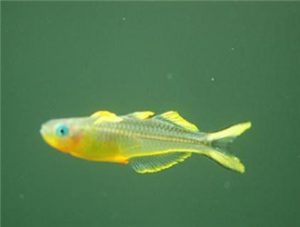
Forktail Blue-eye
The forktail blue-eye is a small rainbowfish with a pale blue-green, semi-transparent body that looks beautiful swimming in the aquarium, so it costs more than other rainbowfish.
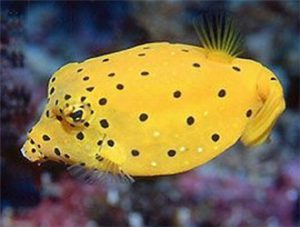
Papaya Fish
The papaya fish has a very special name and equally special looks. Its whole body is wrapped in a hard bony carapace that cannot move; only the mouth and caudal peduncle are free, so it moves very slowly.

Molly Fish
Like the guppy, the molly is a live-bearing fish, and by body shape it is roughly split into common and balloon types, so there are many molly varieties. Mollies are very gentle and can be mixed with other equally gentle ornamental fish.