Search Results
658 results for “Behavior”
How to Prevent Aggressive Behavior in Cats
Cats bite or swat from fear, play-hunt practice, attention-seeking, or low mood. Give them time and space to settle, play with toys not hands, and ignore then redirect rough play. Build trust slowly so a scared cat learns you are not a threat.

Will Beating a Dog Fix Bad Behavior? Read This First
Scolding or hitting a dog after a mistake does not work — a dog's mind is like a 2–3-year-old child and cannot link delayed punishment to the act, while beatings breed fear and aggression. Stop the behavior in the moment and redirect with positive guidance instead.

What Behaviors Show a Cat Is Possessive?
A possessive cat claims you by rubbing its scent on you, sitting on your feet, licking you, deliberately soiling spots you use, and following you to bed. It's a sign of affection, but if it turns extreme, train it and give daily attention so it doesn't develop bad habits.

Why Do Cats Imitate Their Owners’ Behavior?
Cats may imitate their owners to fit into the home, satisfy curiosity, play and bond, show affection, or seek attention. This mirroring is a normal sign of learning and attachment, and understanding it helps owners respond with patient, better care.
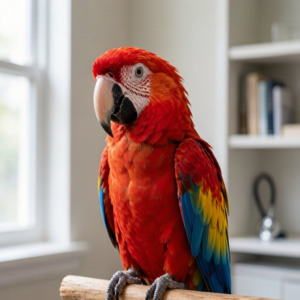
Scarlet Macaw: Traits and Natural Behavior
The scarlet macaw is among the most vividly colored parrots, with a body dominated by brilliant red and accented by yellow, white, and deep blue across the wings and tail. A large, strong black beak easily cracks hard nuts and fruit. These birds live in subtropical and tropical forests, roost high in big trees, and are highly social, gathering in flocks that can top thirty individuals. Understanding their size, diet, lifespan, and breeding needs is essential before taking one home.
How to Stop Destructive Behavior in Cats
Cats may tear things up out of boredom, excess energy, or a bid for attention, so the fix must match the cause. Provide stimulating toys and play, set clear rules and stop bad acts with a sound or spray, and give regular companionship so they don't act out from loneliness. If the damage is deliberate, scold in the moment and withhold attention if it's attention-seeking; for safety-affecting behavior, consult a vet or behaviorist. Enough love, structure, and interaction let a cat thrive.
Reading Your Dog’s 8 Common Behaviors
Dogs 'speak' through action. Chewing furniture may mean separation anxiety; yawning signals stress relief; bringing you an item asks to play or says 'I love you'; sitting on your lap claims you; sleeping on your bed protects you; a calm gaze is fine but a restless one needs care; a raised paw seeks attention or checks for injury; leaning on you shows trust.
Dog Training Basics: Shaping Behavior
Shaping builds a new behavior step by step. First, the goal must be feasible and workable for the breed—teaching a Chihuahua to bite-grip makes no sense as a pet but fits a hunting dog, and tiny breeds need small-dog methods. Set accurate, flexible evaluation standards (reward only the target sound). Reward within about 1.5 seconds so reinforcement lands; plan steps that are neither too big (dog loses confidence) nor too small (slow). Stay adjustable, and make the result adaptable across environments like parks and strangers.

What Are a Dog’s Social Behaviors?
Dogs rely on a rich set of social behaviors to communicate and bond with one another. Their primary channel is scent: by sniffing each other's hindquarters, ears, and tails, dogs read information about age, sex, health, and social status, then decide whether to be friendly or hostile. They also use body language—eye contact, vocalizations, and posture—to express emotion and intent. Play behaviors like chasing, mock biting, and mutual sniffing build social skills and trust, while some clever dogs even share food to signal friendship and deepen bonds. Understanding these behaviors helps owners read their dog's social world.

Understanding Aggressive Behavior in Cats
Given their size, cats can be formidable opponents. Unlike dogs, cats have three weapons: an open mouth with sharp teeth and four dexterous paws with needle-like claws, making them harder to control.